
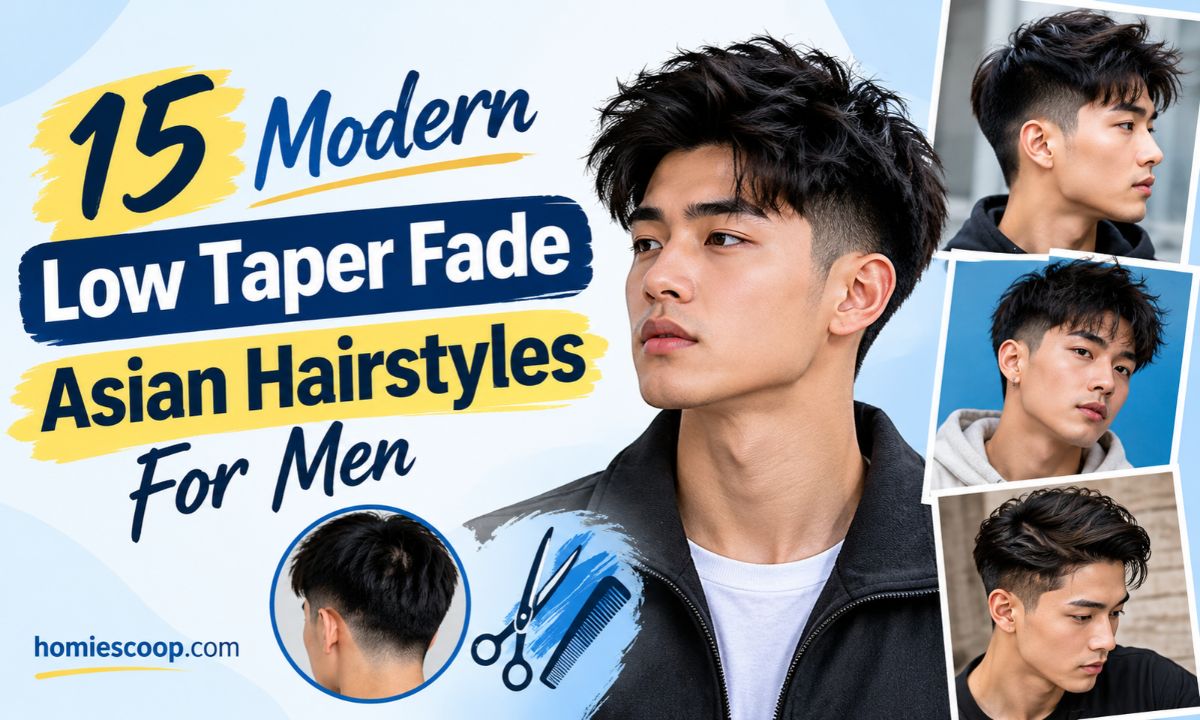
A low taper fade is a haircut where the hair gradually shortens near the sideburns and neckline while the sides and back stay soft and slightly longer. For Asian men, this cut works especially well because straight, dense hair needs clean edges and controlled weight to look sharp. The taper keeps the shape tidy without the harsh contrast of a high skin fade.
This guide covers 15 modern low taper fade styles built around the texture, growth patterns, and facial structure common in East Asian hair. You will also find advice on hair types, face shapes, and how often to visit the barber. Every section includes a plain, direct answer so you can quickly decide what to ask for at your next appointment.
Quick answer: The best low taper fade for most Asian men keeps 3 to 4 inches of length on top, a soft fringe or natural part, and a taper that starts just above the ear and neckline. It grows out cleanly and needs only a few minutes of styling.
Low Taper Fade at a Glance
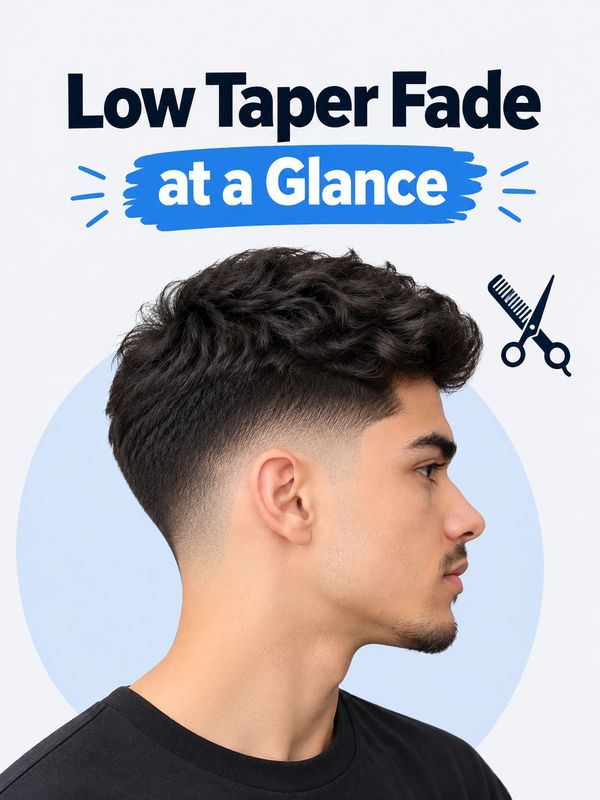
Before the full list, here is how the main style families compare. Use this table to narrow your choice fast.
| Style Family | Top Length | Styling Effort | Best Hair Type | Best Face Shape |
| Fringe-based tapers | 3 to 4 inches | Low | Straight, fine to medium | Oval, square, diamond |
| Textured crown tapers | 3 to 5 inches | Medium | Thick, coarse | Round, oblong |
| Side-part tapers | 3 to 4 inches | Low | Straight, medium | Oval, heart, square |
| Blended wolf or wavy tapers | 4 to 6 inches | Medium | Wavy, thick | Oblong, diamond |
| Neat edge tapers | 2 to 3 inches | Low | Any straight hair | Any |
1. Seoul Edge Low Taper

The Seoul Edge Low Taper is a clean, polished cut inspired by the neat grooming seen in Korean street fashion. The sides taper gently from the temple to the neckline, while the top stays about 3 to 4 inches long with light texture.
This style suits men who want a sharp look at work and a relaxed look on weekends. Ask your barber for a number 1 or 2 guard at the lowest point of the taper and scissor work on top.
Styling tip: Apply a pea-sized amount of matte clay to damp hair, then push the top slightly forward and to the side. Matte products keep the finish natural instead of shiny.
2. Glasses-Friendly Taper

The Glasses-Friendly Taper is a low taper fade designed so the hair around the ears stays short and flat. Short sides prevent bulk from pushing eyeglass arms away from the head, which improves comfort and keeps the frames sitting straight.
The top can stay medium length with a gentle sweep off the forehead. This keeps the eyebrows and frame line visible, which gives the face a balanced look.
Best for: Men who wear glasses daily, especially those with thick sides that tend to puff out above the ears.
3. Forward Fringe Taper

The Forward Fringe Taper combines a low taper with hair brushed down and slightly forward over the forehead. It is one of the most recognizable looks in modern East Asian grooming, and it suits straight hair very well.
The fringe should end around the eyebrow line, with light texturizing so it does not look like a heavy block. The tapered sides keep the cut from feeling bulky.
Styling tip: Blow dry the fringe forward with a small round brush, then finish with a light sea salt spray for separation.
4. Airy Crown Taper

The Airy Crown Taper adds lift and movement at the crown while the sides stay neatly tapered. A short, low fade keeps the outline tidy, and thinning shears remove weight from the top so the hair moves rather than lies flat.
This cut works well for dense, coarse hair that tends to look heavy. The airy finish also helps men with a strong cowlick, because the movement hides the direction of growth.
Best for: Thick hair, round faces, and anyone who wants extra height without hard styling.
5. Temple Shadow Taper Fade
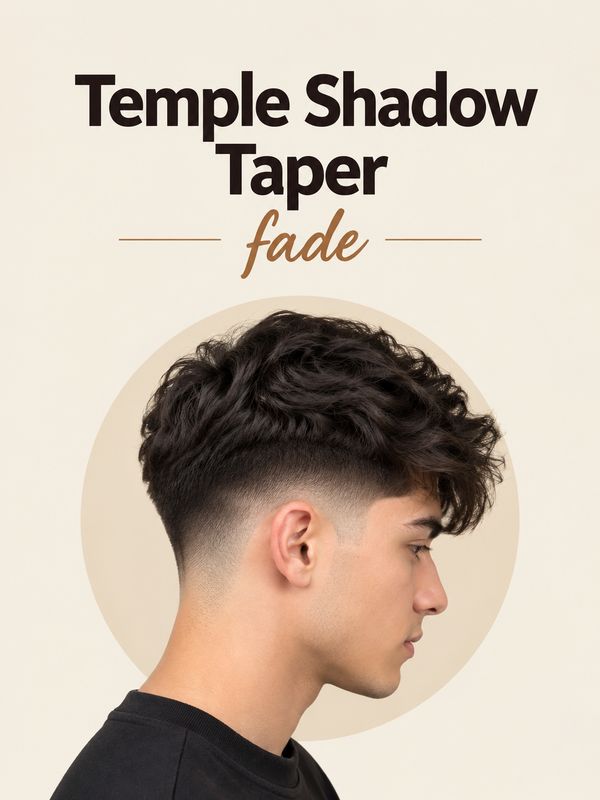
The Temple Shadow Taper uses a soft, shaded fade that begins at the temple and fades down toward the ear. The result looks subtle from a distance and refined up close.
Because the fade is gentle, the cut grows out gracefully for several weeks. It is a smart choice for men who want a barber-fresh look without a dramatic contrast.
Barber note: Ask for a blurred transition instead of a visible line. A good barber will blend with a comb and clippers until no hard edge remains.
6. Split Fringe Taper

The Split Fringe Taper parts the fringe slightly in the middle or just off center, letting the hair fall to both sides of the forehead. The look is relaxed and works well with the soft curtain styles popular across Korea and Japan.
Pair the parted fringe with a low taper so the sides stay clean. The contrast between loose top hair and neat sides gives the cut a modern, balanced shape.
Best for: Oval and oblong faces, since the parted fringe shortens the visual length of the forehead.
7. Clean Temple Corner Taper
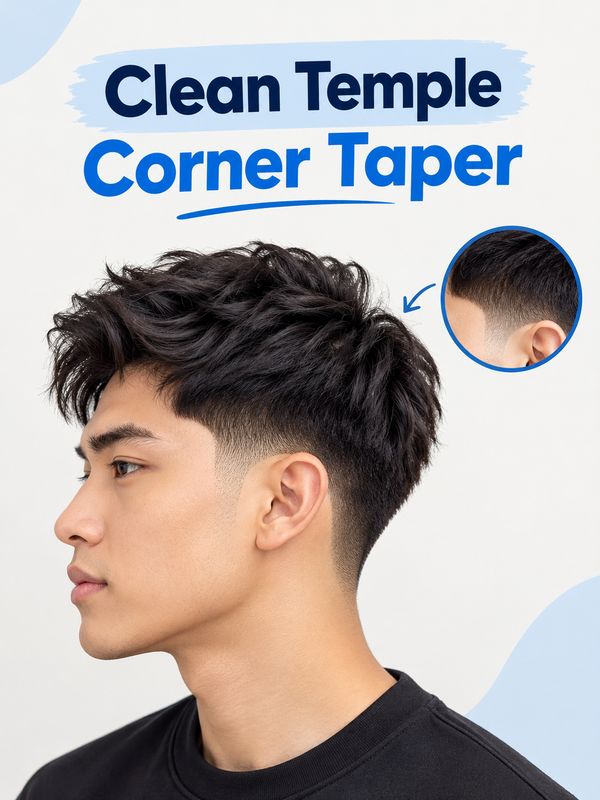
The Clean Temple Corner Taper focuses on a crisp edge around the temple corners and sideburns. A barber outlines the hairline with a trimmer, creating a tidy frame around the face.
This style is ideal for men with a naturally strong hairline. The sharp outline makes the face look more defined, especially when the top is kept simple and slightly textured.
Styling tip: Keep the top natural. The edge work already provides the visual impact.
8. Soft Wolf-Taper Blend

The Soft Wolf-Taper Blend mixes a modern wolf cut with a low taper. The top and back keep slightly longer, layered lengths, while the sides and neckline are tapered to avoid a messy shape.
This cut suits men with thick, straight, or slightly wavy hair. Layers create movement, and the taper stops the length from looking heavy around the ears.
Best for: Creative professionals and anyone who wants a fashionable shape that still looks organized.
9. Razor-Clean Temple Taper
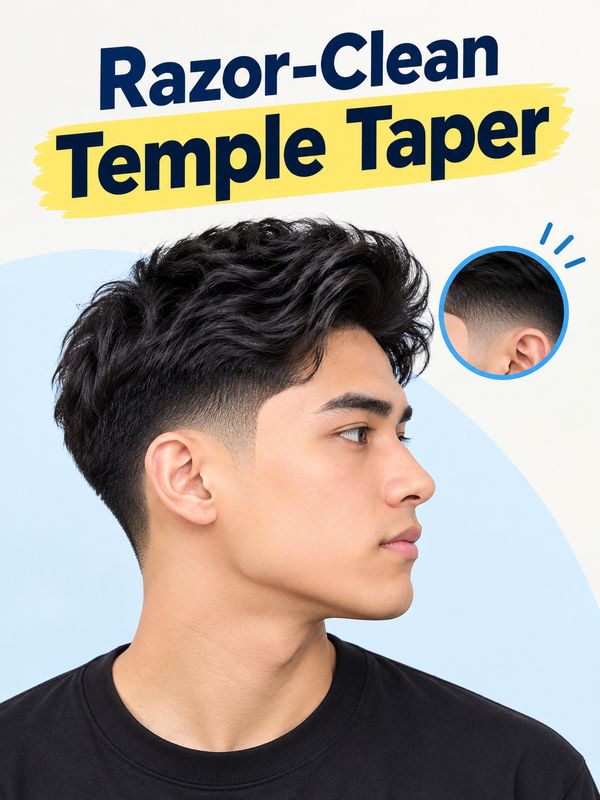
The Razor-Clean Temple Taper adds a razor finish to the temples and neckline for extra sharpness. The fade is still low and soft, but the outline looks crisp enough for formal settings.
Because the razor leaves very little stubble, the haircut looks fresh for the first week. After that, the outline softens naturally.
Barber note: Razor work needs a skilled hand. Choose a barber who shows clean edges in their portfolio, and avoid razor finishing if your skin is easily irritated.
10. Natural-Part Taper

The Natural-Part Taper follows the direction your hair already grows. Instead of forcing a side part, the barber finds your natural parting line and cuts around it.
This approach makes styling quick and reduces the need for heavy products. It is especially useful for Asian men whose hair grows in strong, straight directions that resist being combed the wrong way.
Styling tip: Comb the part while the hair is damp, then let it air dry or use a low heat blow dry.
11. Collar-Neck Taper
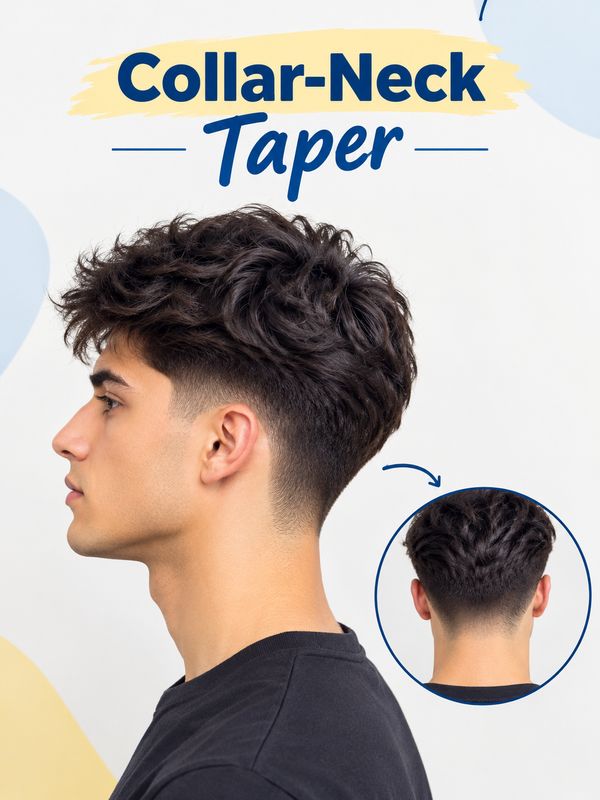
The Collar-Neck Taper focuses on the back of the head. The neckline tapers smoothly instead of being cut blunt, which prevents the awkward square look that appears as hair grows.
A tapered neckline sits neatly above a shirt collar and looks tidy from behind. It is a small detail that makes the whole haircut look professional.
Best for: Men with thick necklines, office workers, and anyone who wears collared shirts often.
12. Soft C-Curve Fringe Taper
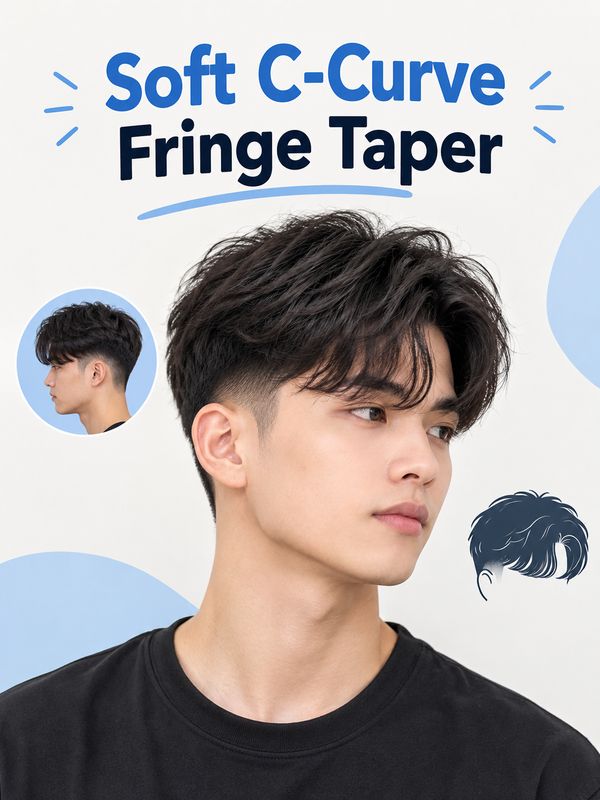
The Soft C-Curve Fringe Taper shapes the fringe into a gentle curve that sweeps across the forehead. The curve mirrors the shape of the brow and softens angular features.
The low taper keeps the sides slim, so the curved fringe becomes the focus. Use a blow dryer and a small amount of cream to train the bend, then finish with a light hold spray.
Best for: Square faces and strong jawlines, where the soft curve balances sharp angles.
13. Crown-Flow Taper

The Crown-Flow Taper directs the hair from the crown toward the front in a smooth flow. A barber cuts with the growth pattern so the hair lies naturally and stays in place all day.
This cut is helpful for men with a double crown or an uneven whorl. A longer top weight can hide the whorl, while the taper keeps the sides slim.
Styling tip: Use a paddle brush while blow drying, moving from the crown forward.
14. Ear-Tucked Taper
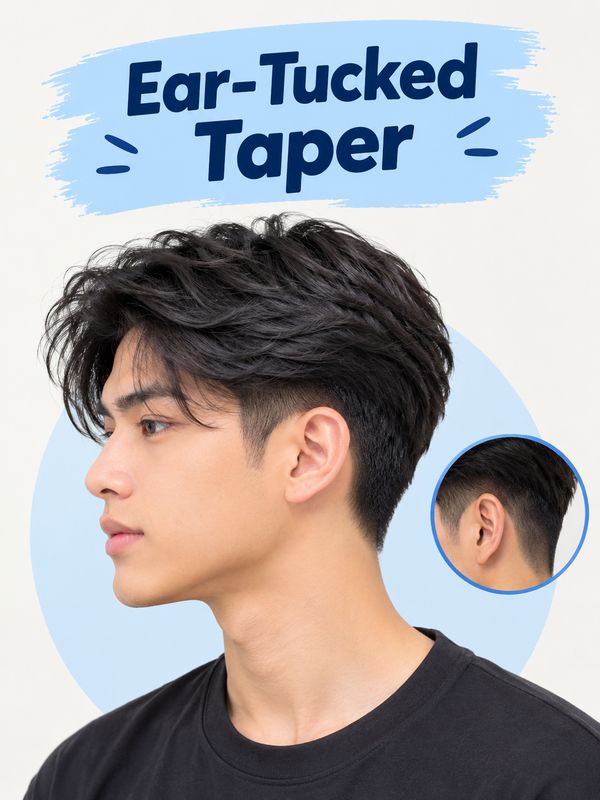
The Ear-Tucked Taper keeps the hair over the ears slightly longer so it can tuck behind them, while the lower sides and neckline stay tapered. The look is casual and works well for men growing their hair out.
The taper prevents the grow-out phase from looking shapeless. Even with extra length on top and sides, the clean neckline keeps the cut intentional.
Best for: Men transitioning from short hair to medium length.
15. Modern East-Asian Taper Blend
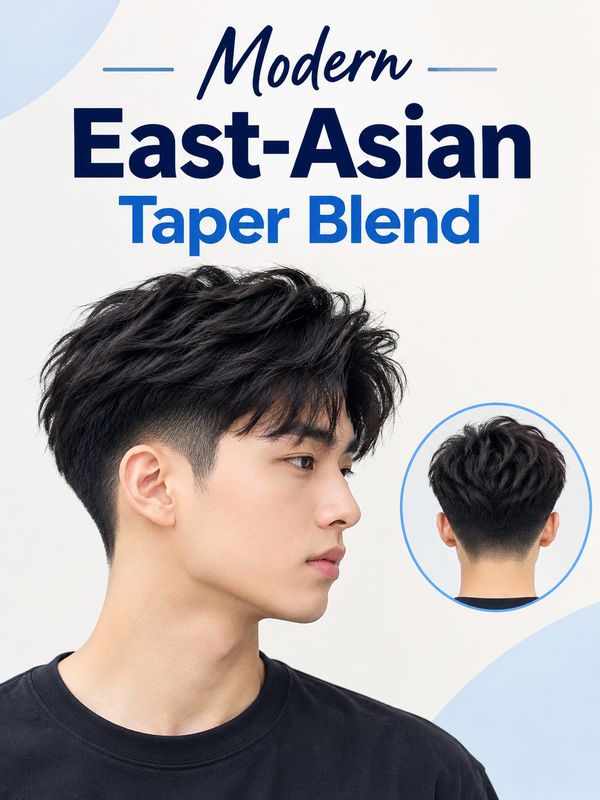
The Modern East-Asian Taper Blend combines the strongest ideas from the styles above. It has a light fringe, a natural part, softly textured top hair, and a low taper that wraps around the ears and neckline.
This is the most flexible option on the list. It works for office, school, and social settings, and it adapts to different hair densities with small changes to layering.
Best for: First-time taper clients who want a safe, stylish cut.
Which Hair Types Suit These Hairstyles?
Asian hair is typically straight, strong, and round in cross section, which gives it a thicker diameter than many other hair types. This structure holds a taper shape well, but it also means the hair grows outward and needs smart layering.
The table below matches hair type to the best taper approach.
| Hair Type | Best Taper Styles | Key Adjustment |
| Straight Asian hair | 1, 3, 6, 10 | Texturize the top |
| Dense or coarse hair | 4, 5, 8, 13 | Remove weight with thinning shears |
| Fine straight hair | 2, 7, 11, 12 | Keep layers light, add volume powder |
| Slightly wavy hair | 8, 14, 15 | Keep extra length for movement |
| Thick medium-length hair | 8, 13, 14 | Add layers to avoid a helmet shape |
Straight Asian Hair
Straight Asian hair is smooth and heavy, so it falls flat without texture. Choose a fringe taper or a natural-part taper and ask for point cutting on the top. Point cutting adds soft, uneven ends that give the hair separation.
Dense or Coarse Hair
Dense hair has a high number of strands per square inch, which makes it puff outward at the sides. A low taper removes bulk exactly where it builds up. Ask your barber for thinning work on the top so the hair moves instead of sitting like a block.
Fine Straight Hair
Fine straight hair can look flat or thin if cut too short. Keep the top at around 3 to 4 inches, and avoid heavy layering. A matte powder or light mousse adds volume without weighing the hair down.
Slightly Wavy Hair
Slight waves add natural texture, which makes styling easier. Keep the top longer so the wave shows, and let the taper clean up the sides. A sea salt spray enhances the wave without frizz.
Thick Medium-Length Hair
Thick medium-length hair needs a clear structure. Layered cuts like the Soft Wolf-Taper Blend or the Ear-Tucked Taper keep the volume balanced. Without layers, thick hair tends to form a rounded, helmet-like shape.
Which Face Shapes Work Best?
A low taper fade suits almost every face shape when the top length and fringe are chosen correctly. Face shape guides where you add height, width, or softness.
| Face Shape | Recommended Styles | Avoid |
| Oval | Most styles, especially 1, 6, 15 | Very heavy fringes |
| Round | 4, 5, 13 | Flat, wide fringes |
| Square | 3, 7, 12 | Very boxy, blunt tops |
| Diamond | 3, 6, 8 | Extreme side volume |
| Heart | 6, 10, 14 | Tall, heavy tops |
| Oblong | 3, 6, 8 | Very tall tops |
Oval Face
An oval face is balanced and flexible, so nearly every taper works. The Seoul Edge Low Taper and the Modern East-Asian Taper Blend show off the natural proportions.
Round Face
A round face looks longer with added height and tighter sides. Choose the Airy Crown Taper or the Crown-Flow Taper, and keep the fringe light so the forehead is not fully covered.
Square Face
A square face has a strong jaw and a wide forehead. Curved fringes such as the Soft C-Curve Fringe Taper soften the angles, while a clean temple outline keeps the look sharp.
Diamond Face
A diamond face has wide cheekbones and a narrower forehead and chin. A forward fringe adds width at the forehead, which balances the cheekbones.
Heart Face
A heart face has a broader forehead and a narrower chin. A side-parted or split fringe reduces the forehead width, and a medium length on the sides adds balance near the jaw.
Oblong Face
An oblong face is longer than it is wide. A fringe cuts the visual length, and a lower taper avoids stretching the face further. Keep the top moderate so the cut does not add extra height.
Read More: Dreadlocks Styles For Men: 45 Short, Long, & With Best Ideas
How Often Should You Refresh the Taper?
A low taper fade should be refreshed every 3 to 4 weeks to keep the neckline and sideburns clean. Because the fade is soft and low, it grows out gradually, so many men can stretch visits to 5 weeks without the cut losing its shape.
Use this schedule as a guide.
| Style Type | Suggested Refresh Time |
| Razor-clean or sharp outline tapers | Every 2 to 3 weeks |
| Standard low taper with fringe | Every 3 to 4 weeks |
| Soft shadow or natural-part tapers | Every 4 to 5 weeks |
| Wolf blend or ear-tucked tapers | Every 5 to 6 weeks |
Home care tips:
- Wash hair 2 to 3 times a week to protect natural oils.
- Use a light conditioner on the lengths and avoid the scalp.
- Apply styling products to damp hair, not dry hair.
- Brush the fringe forward each morning to train the direction.
- Book your next visit before leaving the chair so you never miss the ideal window.
Frequently Asked Questions
Is a low taper good for Asian men’s hair?
Yes. A low taper fade suits Asian men’s hair because it removes bulk at the sides and neckline while keeping a clean, natural shape that matches straight, dense hair.
Does a low taper make thick Asian hair look thinner?
Yes. A low taper reduces width at the sides and back, which makes thick Asian hair look slimmer and more controlled without cutting the top too short.
Is a low taper suitable for thin Asian hair?
Yes. A low taper works for thin Asian hair when the top stays around 3 to 4 inches long, since the longer top adds the appearance of fullness.
How long should the top be?
The top should be about 3 to 4 inches for most low taper styles. Shorter lengths of 2 to 3 inches create a neater look, while 4 to 6 inches suits wolf or wavy blends.
Is this haircut suitable for a round face?
Yes. A low taper suits a round face when the top has height and the fringe is light, because these details make the face look longer and more defined.
How often should I get the haircut?
Get a low taper fade every 3 to 4 weeks to keep the edges clean. Softer versions can last up to 5 or 6 weeks before the shape fades.
Can I combine it with a two-block haircut?
Yes. A low taper can be combined with a two-block haircut by keeping the sides short and slightly faded while leaving a longer, separated top section.
Does a low taper require styling every day?
No. A low taper usually needs only 3 to 5 minutes of styling, and many versions can be air dried with a small amount of matte product.
What should I show my barber?
Bring two or three clear photos of the cut from the front, side, and back. Also tell your barber the guard number, the top length, and the fringe style you want.
Final Thoughts
The low taper fade is a practical, modern choice for Asian men because it respects the natural strength and direction of straight hair. It keeps the neckline neat, slims down dense sides, and leaves enough length on top for a fringe, a part, or textured movement.
Start by choosing the style family that matches your hair type, then adjust the details based on your face shape. If you wear glasses, pick a version with tidy sides. If your hair is very thick, ask for thinning work on top. If you want a natural look, choose a soft shadow or natural-part taper.

Lucas Grant is a fashion writer and digital content creator focused on contemporary style, clothing trends, and fashion culture. At magazinefaxhion, he researches seasonal trends, styling ideas, and industry developments to create clear, practical articles. His editorial approach combines careful research, creative storytelling, and reader focused fashion insights.