


Dreadlocks are rope-like strands of hair formed when hair is sectioned, twisted, and allowed to knot and matte over time. For men, locs work on almost every hair length and texture, from a fresh short start to a waist-long mature set. This guide covers 45 specific styles, plus how to choose, maintain, and wear them with confidence.
Most men search for locs ideas because they want two things at once: a look that feels personal and a routine they can actually keep up. The styles below are grouped loosely by length, finish, and shape, so you can scan for what fits your hair density, face shape, and lifestyle. Each idea includes a quick note on who it suits and what to tell your loctician.
Terminology matters here, so a quick note. Many people use “locs” and “dreadlocks” interchangeably. In this article, “locs” refers to the same hairstyle, and “freeform” refers to locs formed with little to no manual shaping.
1. Short Starter Locs With Clean Sectioning
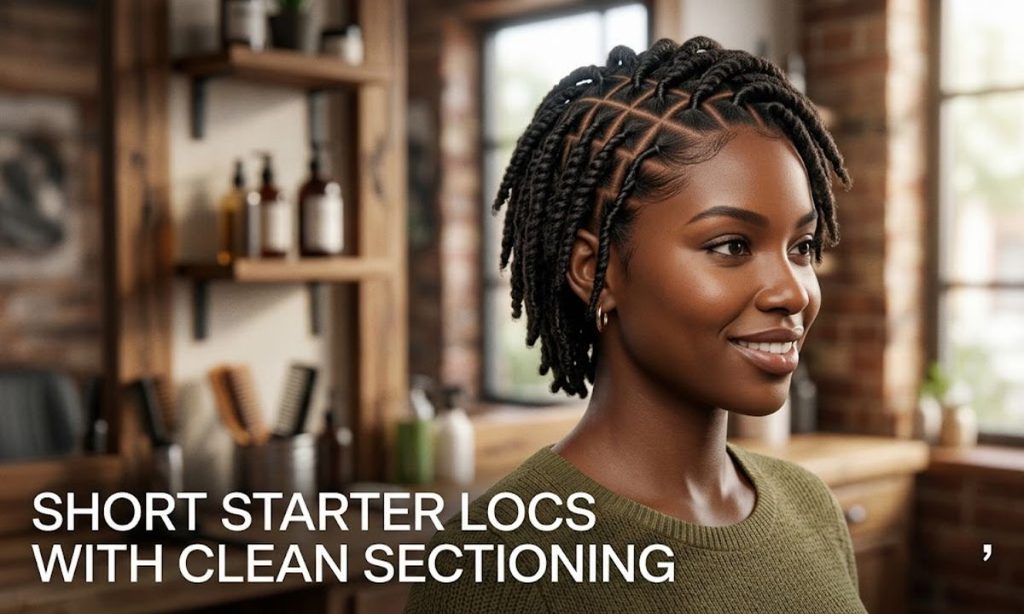
Short starter locs are the first stage of a loc journey, usually started on hair about two to four inches long. Clean sectioning means each loc has its own neat base, so the pattern looks deliberate even before the locs mature.
This style suits men who want a low-profile beginning. Ask for consistent part sizes, because the grid you start with will show for years. Starter locs can look thin at first, which is normal.
2. High-Contrast Locs With a Temple Taper
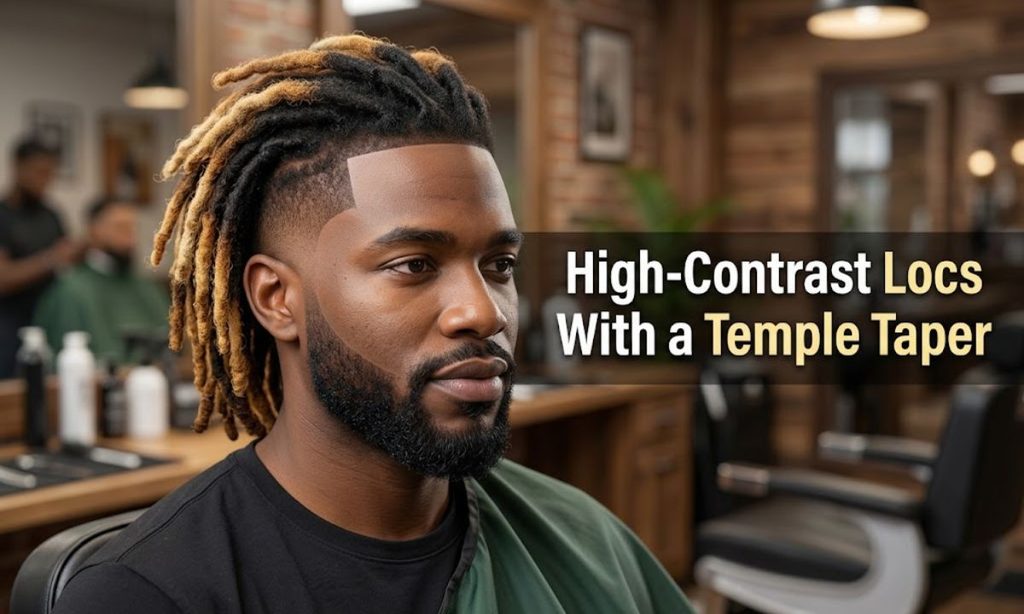
A temple taper shortens the hair gradually around the temples while leaving the top full of locs. The contrast between the skin-close sides and the dense top gives the style a sharp frame.
This look works well on oval and square faces. Book a barber visit every two to three weeks to keep the contrast crisp. Always ask the barber to work around the locs, not through them.
3. Medium Locs With Defined Square Parts

Medium locs usually sit between the ears and the collar, roughly four to eight inches long. Defined square parts mean the scalp sections are boxy and evenly spaced, which creates a tidy, grid-like appearance.
Square parts are popular with men who like an orderly finish. They also make scalp care easier, since oils and cleansers reach each section directly.
4. Freeform Dreadlocks With Natural Growth
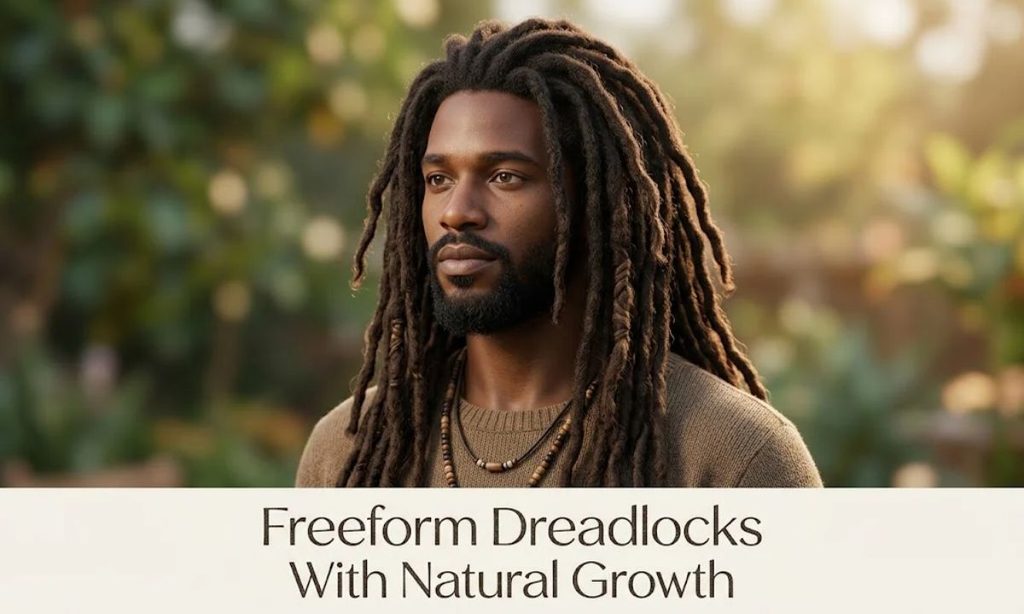
Freeform dreadlocks form without twisting, palm rolling, or interlocking, so the hair knits together on its own pattern. Each loc ends up a different thickness and shape.
This is the lowest-intervention route, but it still needs washing and basic scalp care. Expect an irregular, organic look that many men prefer for its character.
5. Locs With a Low Tapered Neckline

A low tapered neckline trims the hair at the nape into a soft curve that follows the natural hairline. The locs above stay full, while the neck looks cleaned up.
This detail is small but makes a large difference in polish. It also grows out gracefully, so you can stretch the time between trims.
6. Thick Traditional Locs With Full Density

Thick traditional locs are wide, rounded strands, often the width of a pencil or larger. Full density means the sections are large enough that the head looks fully covered.
This style suits men with thick, coarse hair. Fewer locs mean fewer retwists, so upkeep time is shorter than with slim sets.
7. Slim Locs With a Neat Vertical Fall
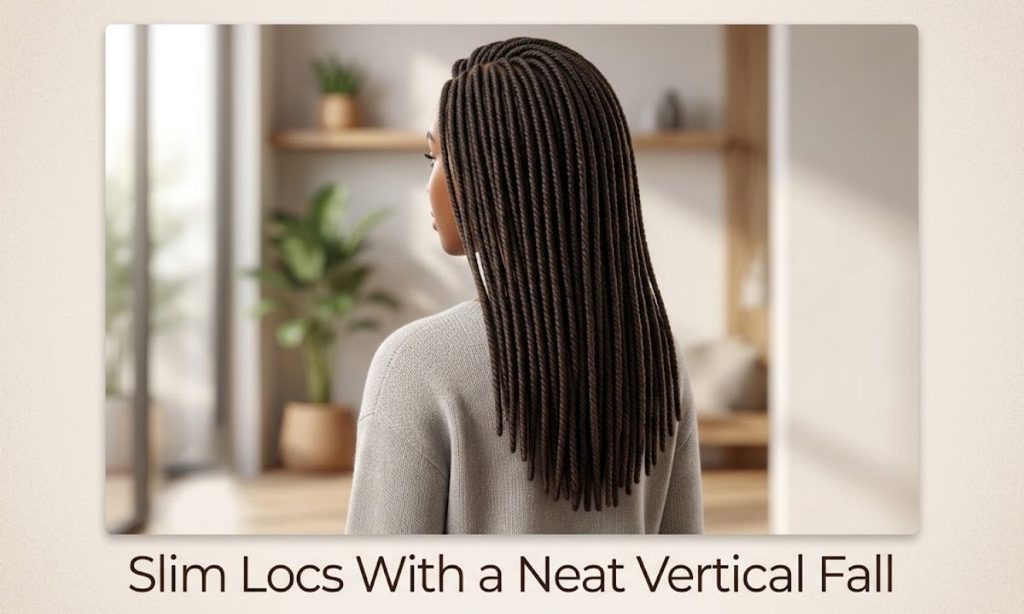
Slim locs are thinner strands that hang straight down with a clean, vertical line. They move more freely than thick locs and feel lighter on the scalp.
This suits men with medium or fine hair. Thinner locs need gentler handling, since tension can stress the roots over time.
8. Shoulder-Length Locs With Natural Movement

Shoulder-length locs reach the top of the shoulders and swing slightly when you walk. Natural movement comes from leaving the ends unbound and the weight evenly spread.
This is one of the most versatile lengths because it can be worn down, tied back, or half up. Many men reach it after about two years of growth.
9. Side-Swept Locs With an Off-Center Part

An off-center part places the division on one side so the locs fall across the forehead or temple. The asymmetry adds shape without any cutting.
This style softens strong jawlines and works for casual or smart settings. Train the part in early by combing the locs consistently to the same side.
10. Locs With a Mid-Level Fade

A mid-level fade starts the shortening around the middle of the sides and blends upward into the locs. It sits between a low fade and a high fade in boldness.
This cut is popular because it balances volume on top with a clean base. Ask your barber to keep the transition line even with the temple.
11. Long Loc Ponytail With Loose Front Pieces

This style gathers most locs into a ponytail while a few front pieces stay loose around the face. The loose strands soften the hairline and break up the pulled-back look.
Use a soft elastic or fabric tie, not a thin rubber band. Thin bands can snap locs at the point of tension.
12. Loc Bob With Rounded Perimeter
A loc bob trims all locs to a similar length around chin level, with the perimeter rounded for a soft outline. It is a neat, intentional shape.
This works best on mature locs, since cutting too early can disrupt formation. Trim only with a loctician or barber who has experience with locs.
13. Barrel-Twisted Loc Arrangement
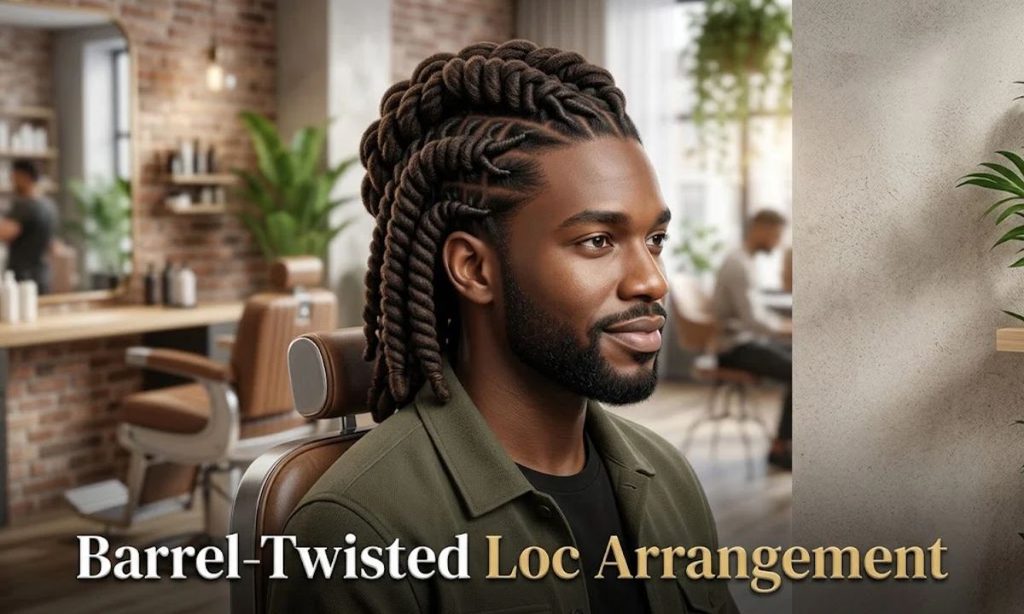
Barrel twists fold a loc over itself and pin it into a rope-like coil. The arrangement gives locs a sculpted, braided appearance without braiding.
It is a good event style and a fast way to change the look without altering the locs. Remove the twists gently so you do not stress the roots.
14. Two-Tone Locs With Controlled Color Placement

Two-tone locs pair one base color with a second shade placed on the tips or a section of the head. The placement is planned rather than random.
Color should be applied by a professional, since bleach can weaken locs. A simple natural black base with warm brown tips is a safe first step.
15. Honey-Blonde Locs With Dark Roots

Honey-blonde locs are lightened strands in a warm golden tone, often paired with dark roots to avoid a flat, solid color. The rooted effect also hides regrowth.
This look suits medium and deep skin tones well. Expect extra conditioning, because lightening removes moisture from the hair shaft.
16. Burgundy Locs With Deep Tonal Dimension

Burgundy locs are dyed in a deep red-violet shade, with slight variation from strand to strand for depth. In sunlight the color reads rich, indoors it reads subtle.
It is a bold option that still looks refined. Choose a semi-permanent dye if you want an easier exit later.
17. Loc Mohawk With Shaved Side Panels
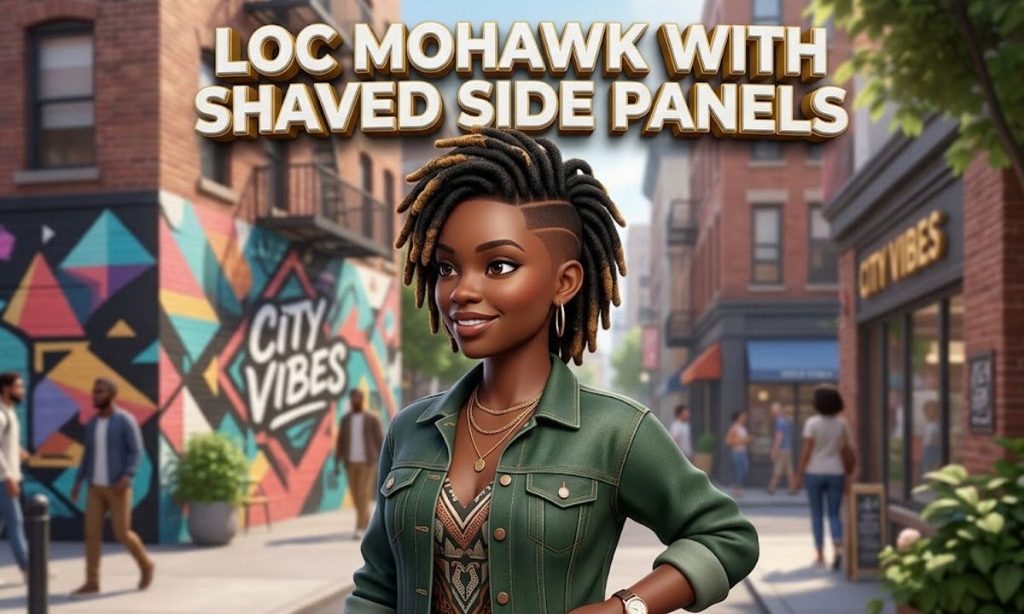
A loc mohawk keeps a strip of locs down the center while the sides are shaved or tapered short. The strip can be worn upright, laid flat, or pulled back.
This is a high-impact style that photographs well. Keep the shaved panels fresh weekly for the sharpest result.
18. Locs With Temple Fade and Full Beard

Pairing locs with a full beard creates a balanced face, since the beard anchors the jaw while the locs frame the top. A temple fade keeps the sides clean so the beard blends smoothly.
Blend the beard into the sideburn area for a seamless line. Beard oil and loc care products should be kept separate to avoid buildup.
19. Locs With Exposed Hairline and Clean Edges
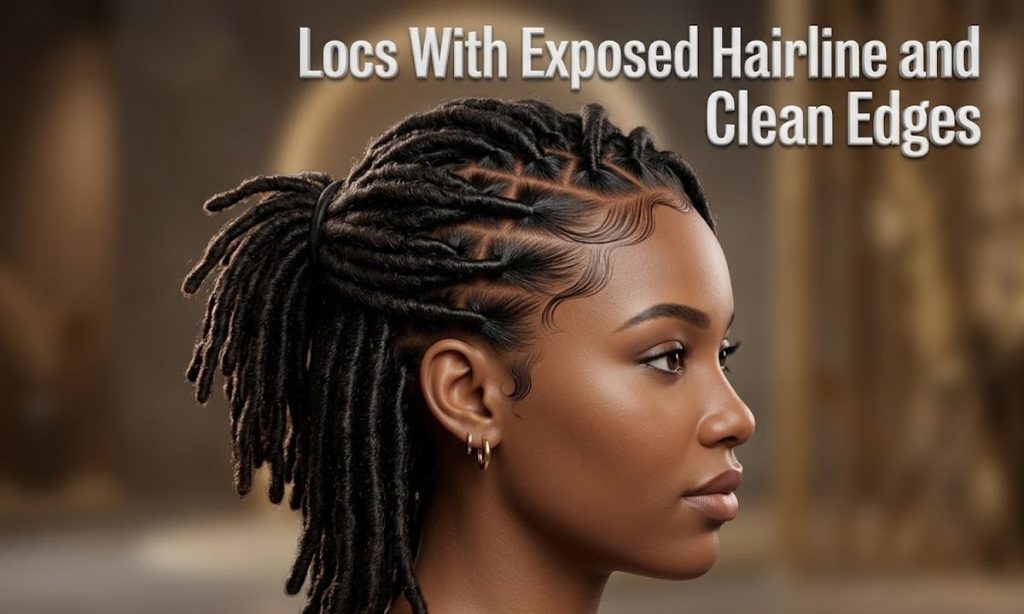
An exposed hairline means the locs are pulled back or set away from the forehead, and the edges are lined up neatly. It shows the face fully.
Edge lining should be done gently. Repeated sharp lining can thin the hairline, so keep it light.
20. Freeform Locs With a Natural Taper

A natural taper on freeform locs means the strands are thicker at the root and thinner toward the tip, as formed by the hair itself. No shaping is added.
This taper looks effortless and is typical of mature freeform locs. It is a sign of healthy, uninterrupted growth.
21. Locs Pulled Into a High Bun

A high bun gathers locs at the crown into a tight or loose knot. It keeps hair off the neck and works for gyms, offices, and warm weather.
Rotate the bun position every few days. Constant tension in one spot can lead to traction thinning.
22. Half-Up Loc Style With Loose Length

Half-up styling ties the top section of locs back while the rest hangs free. It is a flexible middle ground between a full updo and fully down.
This works at medium to long lengths. It also helps hide uneven growth stages in the lower locs.
23. Locs With a Sharp Box Fade

A box fade combines a skin fade with a squared-off line at the top, creating a geometric border between the shaved sides and the locs.
It is a precise, barber-heavy style. Expect a visit every two weeks to keep the line crisp.
24. Micro Locs With Detailed Individual Definition

Micro locs are very thin, often pencil-lead width, installed in large numbers. Each strand is visible, which gives a textured, detailed look.
Installation can take many hours, and retwisting takes time too. They offer styling freedom close to loose hair.
25. Thick Locs With a Deep Side Division

A deep side division sets the part well off-center, creating a dramatic sweep of locs to one side. Thick locs make the effect weighty and bold.
This works well on long faces, since the sideways volume adds width. Keep the part clean with regular scalp maintenance.
26. Locs With Undercut Separation
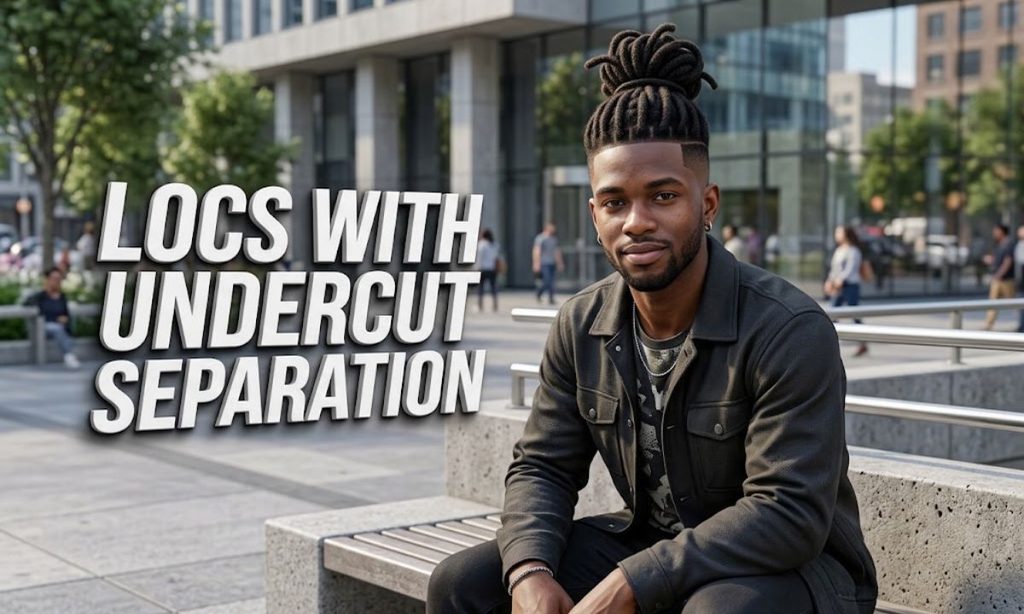
An undercut separates the longer locs on top from shaved hair below, usually at the sides and back. The hard line between them gives a modern look.
When the locs are down, the undercut is hidden. When tied up, it shows. That duality is the main appeal.
27. Locs With a Low Drop Fade

A low drop fade curves down behind the ear, following the skull. The curve adds a sculpted, contoured edge to the locs.
It is a good fit for rounder heads, because the drop lengthens the visual line. Ask for a gradual blend, not a harsh step.
28. Locs With a Braided Crown

A braided crown weaves a band of locs around the head, like a halo. The remaining locs fall loose or are pinned beneath.
This is a protective style that keeps hair off the neck. Take it down every few days so the roots can rest.
29. Locs With Loose Ends

Loose ends are the unraveled tips of a loc, left unfinished instead of rounded or sealed. They give the set a soft, relaxed edge.
This style signals natural growth and requires little tip maintenance. Trim only if the ends become thin or frayed.
30. Locs With Forward-Falling Front Sections

The front sections of locs fall onto the forehead, creating a casual fringe effect. The rest of the locs sit back or down.
This suits men with high foreheads or long faces. Keep the front clean so the fringe does not look messy.
31. Locs With a Clean Low Shadow Fade

A low shadow fade is a subtle fade that leaves a faint hint of hair near the ear and neck, not bare skin. It is softer than a skin fade.
It works for men who want neatness without a stark look. It also grows out in a gentle, forgiving way.
32. Long Locs With a Low Ponytail

A low ponytail gathers long locs at the nape instead of the crown. It is a relaxed, professional way to wear long hair.
Use a wide fabric tie and move it up or down periodically. Avoid pulling tight, especially at night.
33. Locs With a Clean Temple Line

A clean temple line is a precise shape up at the temples that squares off or softens the hairline corners. It sharpens the face without a full fade.
This is a minimal grooming detail with a big visual payoff. Ask for it when you need a neat appearance for an event.
34. Locs With Curved Side Parting

A curved side parting is a soft, arc-shaped division instead of a straight line. It follows the natural curve of the scalp.
The softness suits round and heart-shaped faces. Make sure the loctician keeps the curve consistent during retwists.
35. Locs With Natural Gray Blending
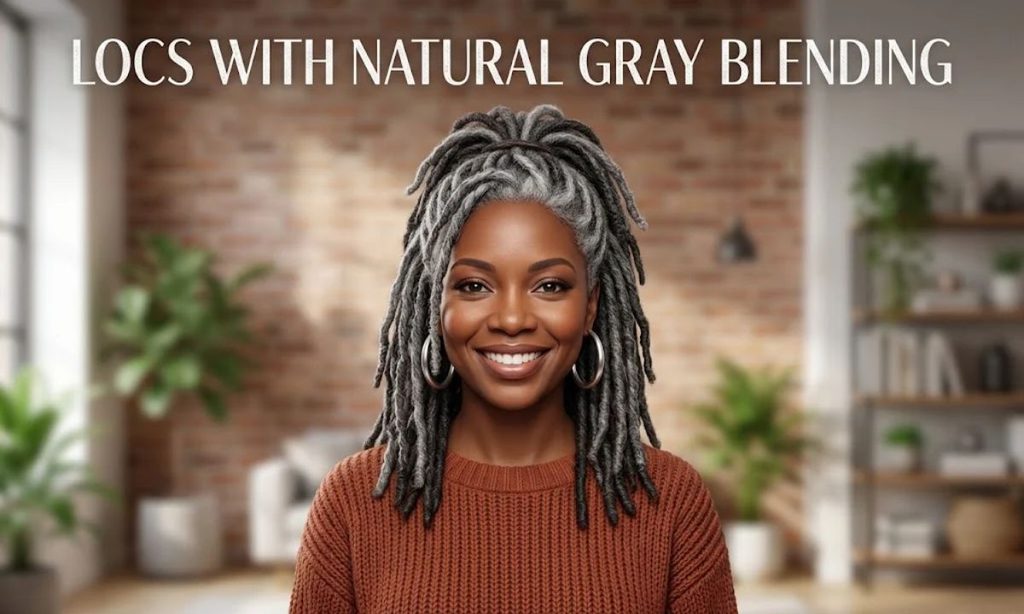
Natural gray blending lets silver and white strands mix with darker locs without dyeing. The result is a distinguished, dimensional look.
Gray hair can be drier, so use light oils and regular moisture. Many men find gray locs more striking than dyed ones.
36. Locs With a Temple-to-Beard Transition

This style fades the temple area smoothly into the beard, with no visible gap between hair and facial hair. The blend creates a continuous, framed look.
It requires an experienced barber. Keep the sideburn width consistent on both sides.
37. Locs With a Rounded Crown Silhouette

A rounded crown silhouette shapes the top of the head into a soft dome of locs. The outline is smooth, with no flat spots.
This suits men with fuller sets. A loctician can balance loc lengths to create the curve.
38. Locs With a Long Back and Shorter Front

This layered effect leaves the back locs long while the front is shorter. It resembles a mullet shape but with locs.
The contrast adds a stylish edge. Grow the back out first, then trim the front gradually.
39. Locs Gathered Into a Side Ponytail
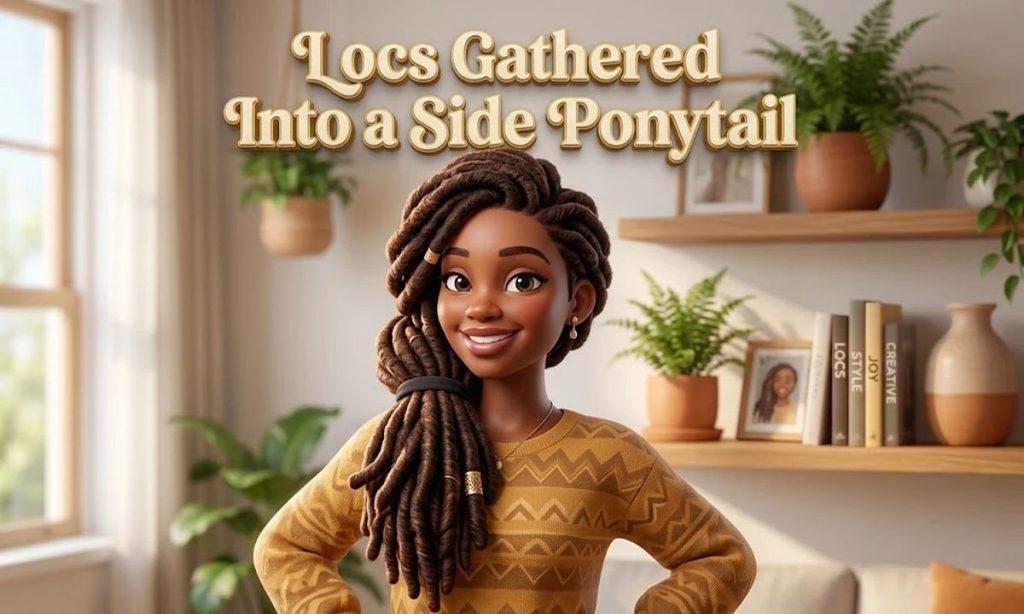
A side ponytail gathers locs to one side of the head. It is an offbeat style that works for evenings and casual events.
Switch sides regularly to avoid uneven tension. Secure with a soft tie.
40. Locs With a Conservative Taper for Work

A conservative taper is a mild fade at the sides and nape with no dramatic lines. The locs stay tidy and uniform.
This is a safe choice for strict dress codes. It looks professional at every length.
41. Locs With Wrapped Crown Styling

Wrapped crown styling coils the locs around the top of the head and tucks the ends in. It looks sculpted, similar to a crown.
This suits formal events. Use pins sparingly so they do not damage the locs.
42. Locs With Uneven Natural Length

Uneven natural length is a result of locs growing at different speeds. The varied lengths give a lived-in, authentic character.
Many men embrace this as part of the journey. Trim only if you want a more uniform finish.
43. Locs With a Sculpted Front and Loose Back

The front locs are twisted, pinned, or shaped upward, while the back hangs loose. This mixes structure and softness in one style.
It is a bold choice that draws attention to the face. Use light hold products that wash out easily.
44. Locs With a Minimalist Low Fade

A minimalist low fade is a very light taper that barely changes the hairline. The focus stays on the locs themselves.
Mature freeform locs are fully formed, thick, and long, with a natural, uneven shape. The silhouette is full and organic.
It is the easiest fade to maintain. It suits men who want a clean look with minimal barber visits.
45. Mature Freeform Locs With a Natural Full Silhouette
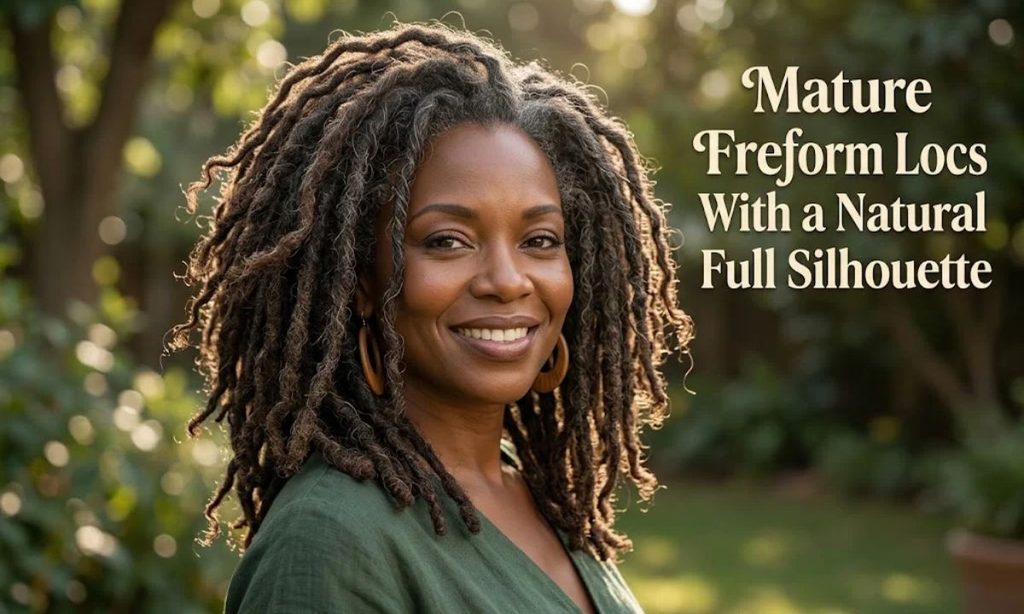
This is the look many men aim for after several years of growth. Patience is the main requirement.
How to Choose Dreadlocks Based on Your Hair Density
Hair density is the number of individual hairs per square inch of scalp. It affects how thick your locs can be and how full the head will look.
| Hair density | Best loc size | Typical look |
| Low density | Medium to thick locs | Fuller coverage with fewer locs |
| Medium density | Slim to medium locs | Balanced, versatile |
| High density | Any size, including micro | Very full, heavy sets |
If your density is low, avoid very small sections, because the scalp may show through. Thicker locs cover more space. A loctician can assess your scalp and recommend a size in minutes.
High density hair offers the most flexibility. You can choose slim, medium, or thick locs without worrying about visible gaps.
Short, Medium, or Long Locs: Which Direction Makes Sense?
Loc length is the distance from the scalp to the tip of the longest strand. Length changes how you style, how much weight your roots carry, and how much time upkeep takes.
| Length | Approximate range | Typical timeline | Best for |
| Short | 2 to 5 inches | 0 to 12 months | Clean, low-profile looks, fades, easy washing |
| Medium | 5 to 10 inches | 1 to 2 years | Versatile styling, half-up and ponytails |
| Long | 10 inches and beyond | 2 to 5 years | Updos, dramatic silhouettes, maximum variety |
Short locs are the easiest to keep tidy and pair best with fades. They also tolerate frequent barber visits. Medium locs give you the most options, since you can tie them back or leave them down. Long locs offer the biggest styling range but carry more weight, which means you should avoid constant tight updos.
A practical rule is to choose the length you can maintain, not just the one you admire. If you work with your hands, play sports, or dislike hair near your face, short to medium is usually the smoother path.
Dreadlocks and Face Shape
Face shape is the overall outline of your face, set by the forehead, cheekbones, and jawline. The right loc style can balance that outline.
| Face shape | Styles that tend to flatter | Why it works |
| Oval | Almost any style, including tapers and ponytails | Balanced proportions suit most shapes |
| Round | Tall locs, high bun, low drop fade | Height and angles add length |
| Square | Medium locs, soft side-swept styles | Softer lines balance a strong jaw |
| Long | Side-swept locs, forward-falling front sections | Side volume adds width |
| Heart | Curved parting, shoulder-length locs | Fullness near the jaw balances the forehead |
These are guidelines, not rules. Hair texture, beard shape, and personal taste matter just as much. Try a style on with a photo filter or ask your loctician to pin your hair in the shape first.
What to Tell Your Loctician Before Starting
A loctician is a professional trained to install, maintain, and care for locs. A clear conversation at the start prevents most regrets.
Cover these points in your consultation:
- Your goal length and timeline. Say whether you want short, neat locs or a long, full set.
- Your preferred loc size. Share photos, because “thin” and “medium” mean different things to different people.
- Your lifestyle. Mention sports, swimming, and work dress codes.
- Your budget and upkeep plan. Ask how often retwists are needed and what each visit costs.
- Your scalp history. Share any dandruff, psoriasis, sensitivity, or thinning.
- Your preferred method. Common methods include comb coils, two-strand twists, interlocking, and freeform.
Also ask the loctician how they handle tension. Properly installed locs should not pull painfully at the scalp. Pain at the roots is a warning sign, not a normal part of the process.
Loc Maintenance That Supports Long-Term Growth
Loc maintenance is the set of routines that keep locs clean, strong, and well formed. Consistent maintenance prevents breakage and buildup.
- Wash regularly. Most men do well washing every one to two weeks with a residue-free shampoo.
- Rinse thoroughly. Leftover product is a common cause of buildup and odor.
- Moisturize lightly. Use a thin spray or light oil on the scalp and strands, and avoid heavy waxes.
- Retwist at a sensible pace. Many people retwist every four to eight weeks. Overdoing it can thin the roots.
- Protect at night. A satin bonnet or satin pillowcase reduces friction and lint.
- Trim when needed. Cut away split or damaged ends with clean scissors.
The most common maintenance error is using heavy beeswax. Wax attracts lint and builds up inside the loc, which is hard to remove. Lightweight, water-soluble products are safer.
| Style type | Upkeep effort | Typical visits |
| Freeform | Low | Occasional check-ins |
| Medium traditional | Medium | Every 4 to 8 weeks |
| Micro locs | High | Every 4 to 6 weeks, longer sessions |
| Locs with fades | High | Barber every 2 to 3 weeks |
How to Keep Locs Looking Good Between Appointments
Between visits, small habits keep locs looking fresh. These steps take only a few minutes.
- Spray a light moisturizer on the scalp every few days.
- Tie locs loosely or cover them with a satin bonnet at night.
- Rinse with water after workouts and wash the scalp as needed.
- Use a clarifying wash once a month to clear residue.
- Wipe the edges with a clean cloth to remove lint.
- Rotate your style so tension does not stay in one spot.
If frizz appears at the roots, wait until your next retwist instead of fighting it daily. New growth is normal and shows that your locs are progressing.
Dreadlocks Trends That Are More Likely to Stay Relevant
Trends in men’s locs move quickly, but a few themes have lasted. These tend to hold up because they are practical, not just fashionable.
- Fades with locs. Low and mid fades keep the sides neat and have remained popular for years.
- Natural and freeform looks. Interest in organic textures and natural growth continues to rise.
- Healthy-hair focus. More men now prioritize scalp health, gentle handling, and lower tension.
- Subtle color. Honey tones, deep burgundy, and silver blends are easier to wear than neon shades.
- Neat edges and clean necklines. Small grooming details keep locs looking polished in any season.
A style that respects hair health will outlast a style built only for attention. If you are unsure, pick a design that still looks good when it grows out.
Common Dreadlocks Mistakes Men Should Avoid
Some errors are easy to make, especially in the first year. Avoiding them saves time and protects your hair.
- Starting with a stylist who lacks loc experience. Poor sectioning is hard to correct later.
- Using heavy wax or thick pomades. They trap lint and cause buildup.
- Retwisting too often. Frequent tightening can thin the hairline and roots.
- Wearing tight updos daily. Constant tension can cause traction alopecia, a type of hair loss from pulling.
- Skipping washes. Dirty locs can develop odor and scalp irritation.
- Cutting hair after starting. Trimming during the early stages can disrupt formation.
- Comparing your timeline to others. Growth rates differ by texture, density, and care.
Patience is the most useful tool. Locs usually pass through an awkward stage between months three and twelve, then settle into a more mature look.
Frequently Asked Questions
Are dreadlocks good for men with short hair?
Yes. Men can start locs on hair about two to four inches long, using comb coils or twists. Shorter starts mean a slower early look, but many people find the process manageable.
How long can men’s dreadlocks grow?
Men’s dreadlocks can grow to waist length or beyond with consistent care. Typical growth is about half an inch per month, so long locs take several years.
Can you combine dreadlocks with a fade?
Yes. Dreadlocks pair well with low, mid, temple, and box fades. A barber experienced with locs should do the cut to avoid damaging the strands.
Are freeform locs completely maintenance-free?
No. Freeform locs need less styling, but they still require regular washing, scalp care, and occasional separation at the roots to prevent merging.
Which dreadlocks are easiest to maintain?
Freeform locs and medium traditional locs are usually the easiest to maintain. They need fewer retwists and fewer barber visits than micro locs or faded styles.
Can men with fine hair wear locs?
Yes. Men with fine hair can wear locs, usually in medium or thicker sizes to avoid visible scalp. Gentle handling and low tension are essential.
How often should dreadlocks be retwisted?
Most dreadlocks are retwisted every four to eight weeks. Retwisting too often can stress the roots, so follow your loctician’s advice.
Can dreadlocks be professional?
Yes. Neat, well-maintained locs with clean edges and a conservative taper suit professional settings. Tying them back can add a formal finish.
Final Thoughts
Dreadlocks offer a wide range of looks for men, from short starter sets to long, mature freeform locs. The best style is the one that fits your hair density, face shape, lifestyle, and willingness to maintain it.
Start with a clear idea of your goals, find a skilled loctician, and keep your routine simple and consistent. Choose gentle products, avoid tight tension, and be patient through the early stages. With steady care, your locs will mature into a style that feels like your own.

Lucas Grant is a fashion writer and digital content creator focused on contemporary style, clothing trends, and fashion culture. At magazinefaxhion, he researches seasonal trends, styling ideas, and industry developments to create clear, practical articles. His editorial approach combines careful research, creative storytelling, and reader focused fashion insights.