


A low taper fade is a haircut where the hair gradually shortens around the ears and neckline while the top keeps its length. It suits Hispanic and Mexican men because their hair is often dense, dark, and full of texture. A clean low taper frames that thickness without removing it.
This guide covers 15 low taper styles, how each hair type responds, and what to say in the barber chair. You will also find styling tips, a taper versus fade comparison, and the most common mistakes to avoid.
1. Mexican Textured Crop With a Low Taper

The textured crop is a short, choppy top cut with a slightly forward fringe. Paired with a low taper, it gives dense hair shape without much length. Ask for point cutting on top and a clean, soft taper around the ears. It works well for men who want a sharp look that needs almost no effort in the morning.
2. Low Taper With Mexican Fringe
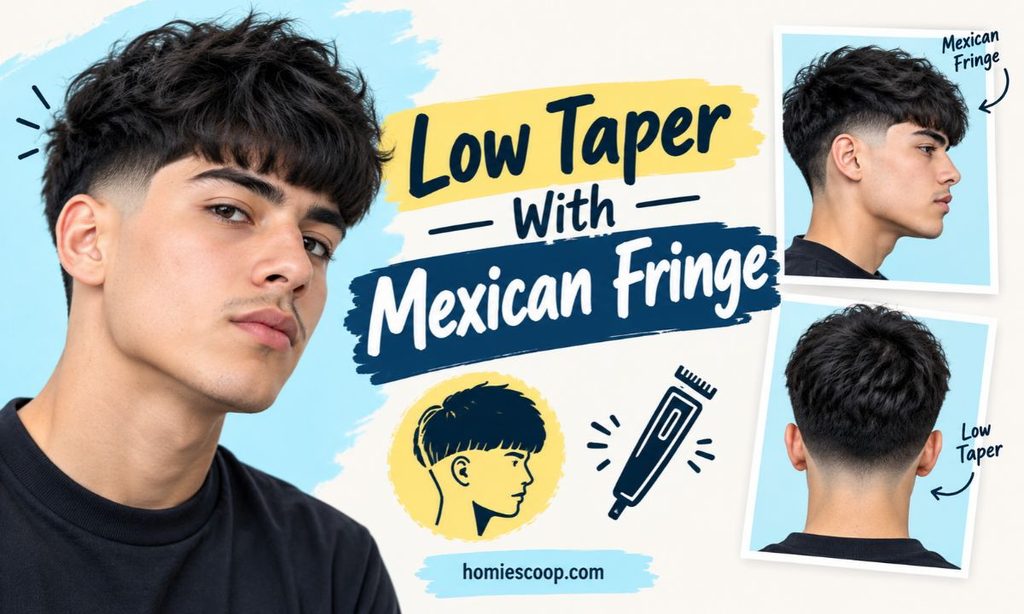
A Mexican fringe sits forward across the forehead, usually cut blunt or lightly textured. The low taper keeps the sides tidy so the fringe becomes the focus. This style suits straight, thick hair that naturally falls forward. Keep the fringe above the eyebrows so it stays neat.
3. Low Taper With Wavy Top
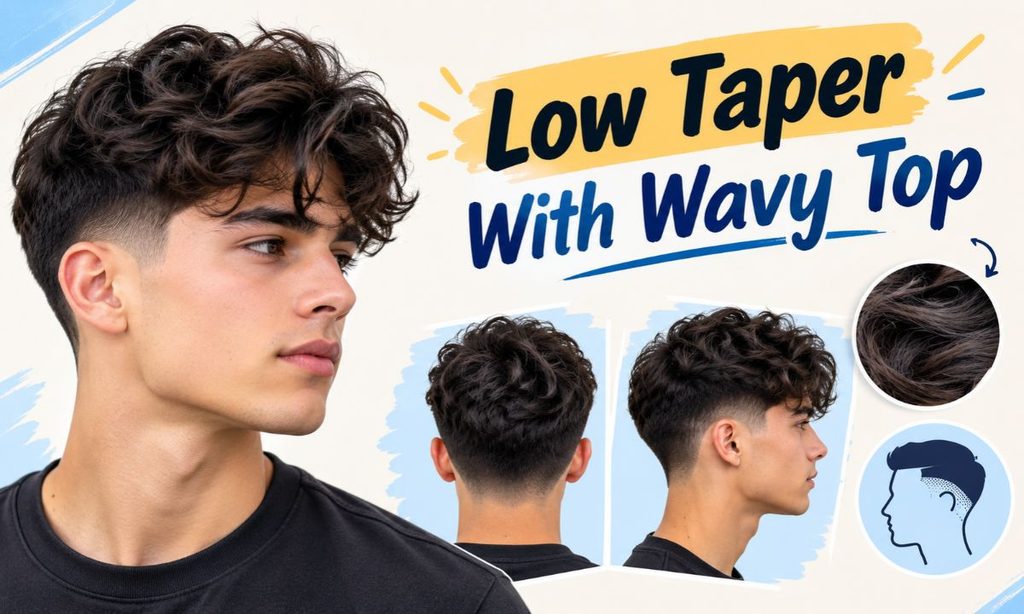
Wavy hair holds its shape best at medium length, about 3 to 4 inches. A low taper keeps the sides slim so the waves do not make the head look wide. Dry the hair with a diffuser and use a light cream. Skip heavy gel, which flattens natural movement.
4. Low Taper With Edgar Influence

The Edgar cut is a Latino haircut known for a blunt, straight fringe and a tight perimeter. An Edgar-influenced low taper keeps the fringe but softens the sides with a gradual blend. This makes the look easier to wear to work or school. Ask the barber for a straight fringe line with no jagged edges.
5. Curly Top With Low Taper
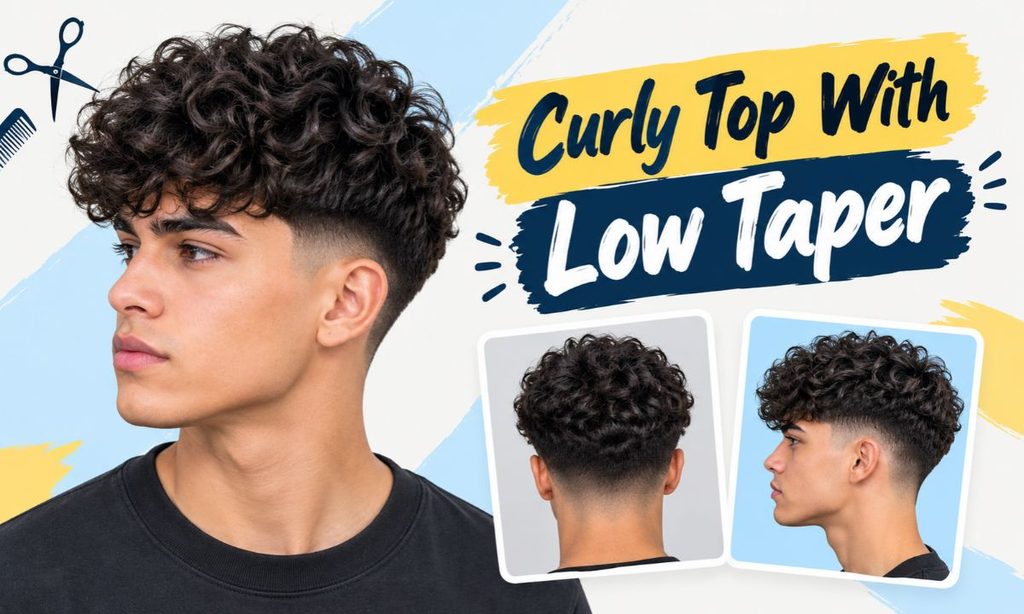
Curly hair needs room to coil, so the top should stay at least 3 inches long. A low taper then trims the sides without touching the curl pattern above. Cutting curls while dry helps the barber see where each curl actually falls. Use a leave-in conditioner to control frizz.
6. Low Taper With Beard Connection

A beard connection means the taper blends directly into the sideburns and beard. The low taper follows the same line as the beard, so the face looks continuous instead of patchy. Many Mexican men have thick facial hair, which makes this blend especially effective. Keep the beard trimmed to a consistent length for the cleanest result.
7. Low Taper With Thick Slicked-Back Top

A slicked-back top suits dense, straight hair that can handle weight. The low taper leaves the sides neat while the top is combed back with a matte pomade. Choose a medium hold so the hair looks styled but not wet. This look reads polished and works for formal events.
8. Low Taper With Caesar Fringe

The Caesar cut features a short, horizontal fringe and uniform length on top. With a low taper, it becomes a minimal, low-maintenance style. It works well on thick hair with a strong hairline. A receding or uneven hairline can also benefit, because the short fringe covers it.
9. Low Taper With Loose Middle Part

A loose middle part splits the hair down the center and lets it fall naturally on each side. A low taper keeps the outline clean while the top stays relaxed. This is a good pick for wavy or straight hair about 4 inches long. Use a sea salt spray for light texture.
10. Low Taper With Short Curls and Line Up

Short curls with a lineup show off tight coils against crisp edges. The low taper frames the curls while a lineup sharpens the forehead and temples. Ask the barber to keep the lineup natural rather than square. A moisturizing oil keeps short curls defined between cuts.
11. Low Taper With Long Crown Movement
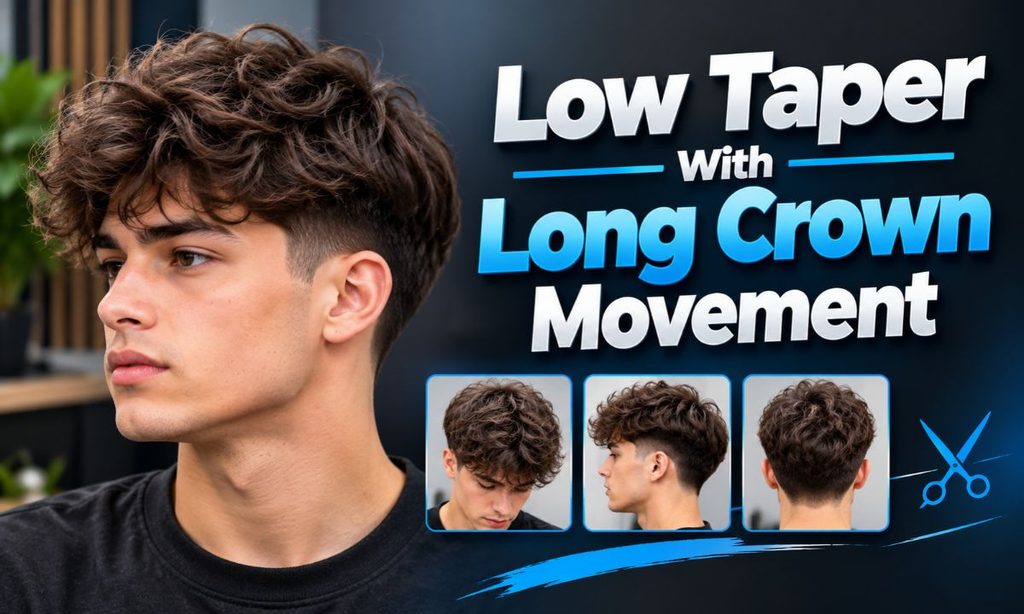
Some men keep extra length at the crown to create flow toward the back. The low taper keeps the sides short while the crown carries visible movement. This approach suits wavy and thick straight hair. It also helps balance a stubborn crown swirl, since the extra weight lies flatter.
12. Low Taper With Hard Part

A hard part is a shaved or razor-cut line that separates the hair on one side. Combined with a low taper, it creates a strong, classic contrast. The style works best on dense hair that combs over cleanly. Ask for a defined part that matches your natural growth direction.
13. Low Taper With Messy Mexican-Inspired Texture

Messy texture means the top is cut with layers and styled loosely for volume. The low taper keeps the sides clean so the mess looks intentional. Apply a small amount of clay and rough it up with your fingers. This is one of the easiest styles to maintain.
14. Low Taper With Pompadour Influence
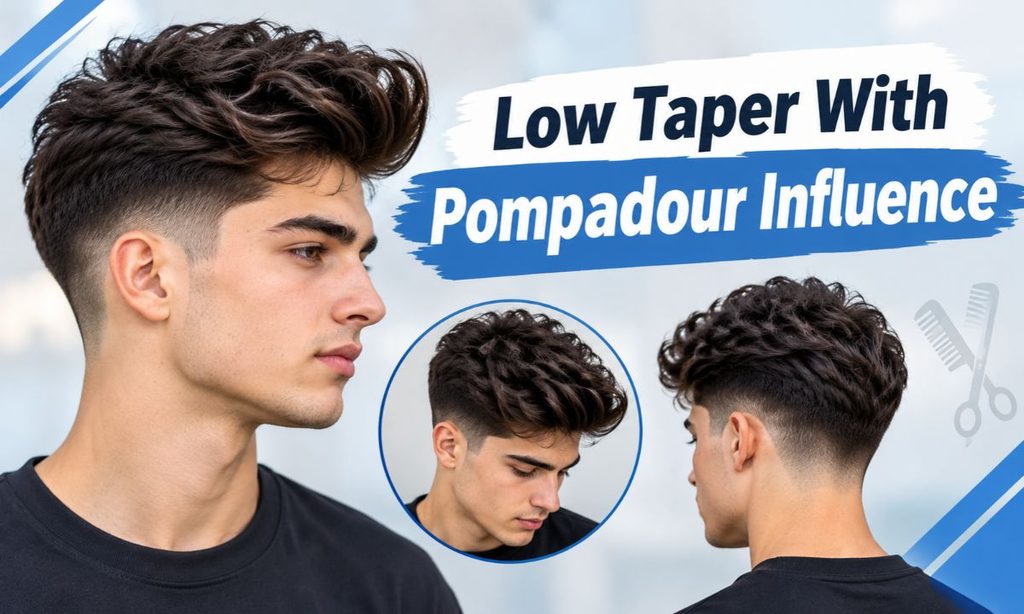
A pompadour lifts the front of the hair upward and back. The low taper gives the sides a slim shape so the height stands out. Thick, dense hair holds this volume well. Use a blow dryer and a firm hold product to set the lift.
15. Modern Hispanic Low Taper With Natural Flow
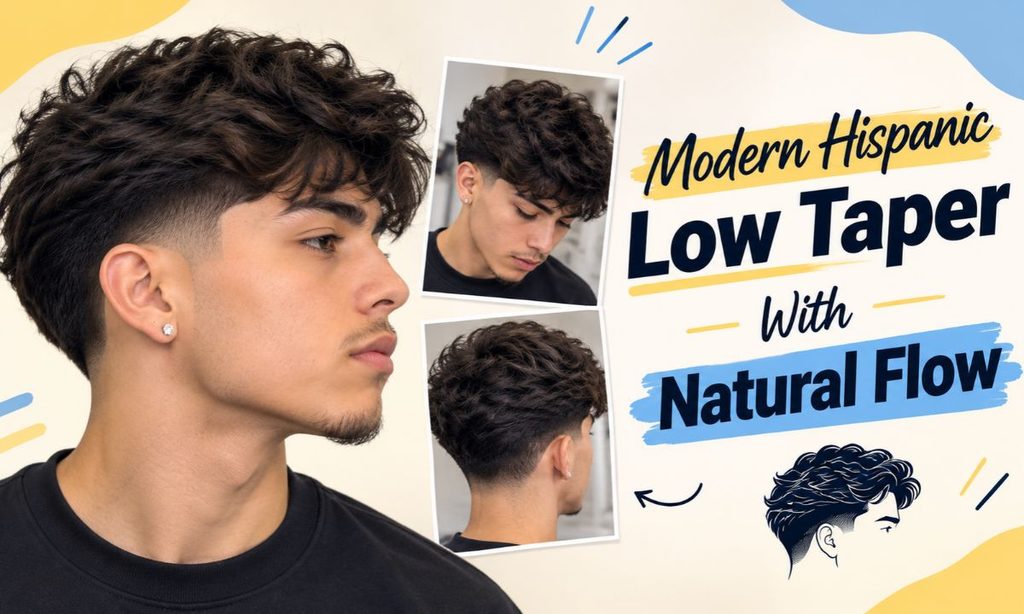
This style leaves the top long enough to move naturally without heavy styling. The low taper trims only the edges. It suits men with straight, wavy, or loosely curled hair who want a clean but relaxed look. A light cream or a bit of oil is usually enough.
What Makes a Low Taper Work on Hispanic and Mexican Hair?
A low taper works on Hispanic and Mexican hair because it removes bulk at the edges while keeping the natural density on top. Hispanic hair ranges from straight to tightly curled, so the cut must follow the hair’s growth pattern.
Three factors matter most:
- Hair density, which is often high
- Growth direction at the crown and nape
- The shape of the hairline
Each hair type below needs a slightly different approach.
Dense Straight Hair
Dense straight hair has a heavy, flat structure that can stack up on the sides. A low taper reduces that bulk around the ears. Texturizing on top prevents the hair from sitting like a helmet.
Thick Wavy Hair
Thick wavy hair expands outward as it grows. A low taper keeps the silhouette narrow. Leave enough top length for the wave pattern to show.
Curly Hair
Curly hair shrinks as it dries, sometimes by 50 percent or more. A low taper gives clean edges while the curls keep their volume. Cut it dry or ask the barber to account for shrinkage.
Coarse Hair
Coarse hair has a wide strand diameter and feels rough. It holds shape well but resists soft blending. Use clippers with sharp blades and take extra time at the temples.
Fine Hair
Fine hair has thin strands, even if the head has many of them. It can look flat when cut too short on top. Keep some length and use a light texture powder for lift.
The Temple Transition Matters More Than the Guard Number
The temple transition is the area where the short sides meet the longer top, and it decides whether a taper looks smooth or harsh. A guard number alone does not control this. A barber who blends the temple carefully will give a better result than one who simply picks a short clipper setting.
When the transition is abrupt, the haircut looks like a bowl. When it is gradual, the taper reads as clean and intentional. Ask the barber to blend the temples slowly and check them in the mirror.
How the Hairline Changes the Result
Hairline shape changes how a taper sits on the head. A low, straight hairline supports a sharp lineup, while a curved or uneven hairline looks better with a softer finish.
| Hairline Type | Best Low Taper Approach |
| Straight | Clean lineup with a crisp taper |
| Rounded | Natural edge with a soft taper |
| Receding | Short fringe with a light taper |
| Widow’s peak | Keep the peak, avoid a square line |
| Uneven | Skip the hard lineup, blend the edges |
Low Taper or Low Fade?
A low taper leaves visible hair length at the sides and neckline, while a low fade shortens the hair down to the skin. The taper is more conservative and easier to grow out. The fade is sharper and needs more frequent maintenance.
| Feature | Low Taper | Low Fade |
| Shortest point | Short stubble | Skin level |
| Contrast | Soft | Strong |
| Maintenance | Every 3 to 4 weeks | Every 2 to 3 weeks |
| Best for | Office, school, everyday | Bold, high contrast looks |
How to Style These Cuts Without Overdoing Product
Most low taper styles need about a dime-sized amount of product. Too much product makes thick hair look greasy and weighs down the top.
- Towel dry the hair until it is damp, not wet.
- Apply a small amount of cream, clay, or pomade to your palms.
- Work it through from the roots to the tips.
- Shape the hair with your fingers or a comb.
- Finish with a light spray only if needed.
Choose products by hair type. Matte clay suits straight hair, curl cream suits curls, and sea salt spray suits waves.
What to Tell Your Barber
Clear instructions prevent most haircut disappointments. Bring a reference photo, but also describe the cut in words.
- Say “low taper” and specify the starting point, such as just above the ear.
- State the top length in inches, not just clipper numbers.
- Ask for the temple blend to be soft.
- Mention whether you want a lineup, and whether it should be natural or sharp.
- Explain how you normally style your hair.
A useful phrase: “I want a low taper that starts at the ear, with a soft temple blend and about 3 inches left on top.”
Mistakes to Avoid
Pushing the taper too high
A high taper creeps above the ear and makes the head look narrower. Keep a low taper close to the ear and neckline.
Over-thinning thick hair
Thinning shears used too heavily can leave thick hair frizzy and uneven. Light texturizing is usually enough.
Cutting curly hair based on its wet length
Wet curls look longer than they are. Dry or account for shrinkage before the barber decides on length.
Forcing a square hairline
A square lineup on a naturally rounded hairline looks artificial. Follow your natural shape.
Ignoring the crown
A crown swirl can make a style fall in the wrong direction. Ask the barber to cut with that growth pattern in mind.
Copying a reference photograph exactly
Your hair density, hairline, and head shape differ from the model’s. Use the photo as a guide, then let the barber adapt it.
Frequently Asked Questions
Is a low taper good for Mexican men’s hair?
Yes. A low taper suits Mexican men’s hair because it manages dense growth around the ears and neck while keeping the natural thickness on top.
What should I ask for at the barbershop?
Ask for a low taper starting just above the ear, with a soft temple blend and a specific top length in inches. Bring a reference photo to confirm the style.
Is a low taper better than an Edgar?
Neither is better. A low taper is subtle and versatile, while an Edgar cut is bolder, with a blunt fringe and a tight perimeter.
Can I get a low taper with curly hair?
Yes. A low taper works well with curly hair when the top is left long enough, usually 3 inches or more, for the curls to form.
Does a low taper work with a beard?
Yes. A low taper can blend directly into the sideburns and beard, creating a continuous and balanced outline.
How often should I get a low taper?
Most men refresh a low taper every 3 to 4 weeks. Men who prefer very sharp edges may go every 2 to 3 weeks.
Can a low taper make thick hair easier to manage?
Yes. A low taper reduces bulk at the sides and neckline, which makes thick hair easier to style and keeps the shape cleaner as it grows.
Is it good for straight hair?
Yes. Straight hair holds the taper’s clean lines well, especially with a textured crop, slicked-back top, or Caesar fringe.
Should I get a lineup with it?
A lineup is optional. It adds sharpness to the forehead and temples, but a natural hairline often looks better on uneven or receding hairlines.
Final Thoughts
A low taper fade is one of the most flexible haircuts for Hispanic and Mexican men. It works with straight, wavy, and curly hair, and it pairs with fringes, crops, slick backs, and natural flow.
The best result comes from matching the style to your hair type, hairline, and daily routine. Be specific with your barber, pay attention to the temple blend, and keep styling simple. A well-executed low taper will look clean on day one and still look good weeks later.

Lucas Grant is a fashion writer and digital content creator focused on contemporary style, clothing trends, and fashion culture. At magazinefaxhion, he researches seasonal trends, styling ideas, and industry developments to create clear, practical articles. His editorial approach combines careful research, creative storytelling, and reader focused fashion insights.