


Have you ever wondered how big is 16 cm in real life? This measurement equals approximately 6.30 inches. It may sound small, but you’ll find similar lengths in many everyday objects.
A 16 cm size comparison makes the measurement easier to picture. Think about a small TV remote, a hairbrush handle, or a compact kitchen utensil.
Not every example measures exactly 16 centimeters. However, these familiar objects can help you estimate the length without a measuring tape.
This guide explains what 16 cm looks like, how to convert it into different units, and where you might encounter this measurement. You’ll also learn simple ways to visualize 16 cm without a ruler.
How Big Is 16 cm? = 6.30 Inches
16 cm equals approximately 6.30 inches. That’s a little more than 6 inches and less than 7 inches.
Imagine holding a small household tool in your hand. Its length might be close to 16 centimeters, depending on its design.
The metric system uses centimeters, while the imperial system commonly uses inches in the United States. Knowing both units helps you understand product dimensions when shopping online.
Here are some quick facts:
- 16 centimeters = 160 millimeters.
- 16 centimeters = 0.16 meters.
- 16 centimeters = approximately 0.525 feet.
- 16 centimeters = approximately 0.175 yards.
For example, if a product listing says it’s 16 cm long, picture an object measuring about 6.3 inches from one end to the other.
16 cm in Different Units
Converting 16 cm into other units helps you understand its actual length. You might see centimeters on international websites and inches on American product listings.
The conversion is simple once you know the basic values.
| Measurement unit | Equivalent to 16 cm |
| Centimeters | 16 cm |
| Millimeters | 160 mm |
| Inches | 6.30 in |
| Meters | 0.16 m |
| Feet | 0.525 ft |
| Yards | 0.175 yd |
| Kilometers | 0.00016 km |
| Miles | Approximately 0.0000994 mi |
To convert centimeters into inches, divide the measurement by 2.54.
For example, 16 ÷ 2.54 equals approximately 6.30 inches.
This conversion table is useful when comparing furniture accessories, kitchen utensils, electronics, and personal accessories. Always check whether a listed dimension refers to length, height, or width.
What Does 16 cm Look Like?
The easiest way to understand 16 cm is to compare it with familiar objects. A length of 6.30 inches fits comfortably within the size range of many handheld items.
Imagine a small notebook or a compact flashlight. Either could measure close to 16 centimeters along one dimension.
However, actual sizes depend on the product. A large smartphone might approach this length, while another model could be longer or shorter.
Try picturing a straight line stretching from the tip of your thumb to a point several inches beyond it. That visual can help you estimate the measurement.
For a more accurate comparison, use a metric ruler or measuring tape.
Remember that 16 cm describes length, not necessarily height, width, or diameter. The correct measurement depends on how you position the object.
Why Understanding 16 cm Matters
Understanding how big is 16 cm can help you make better decisions in everyday situations. You don’t always have a ruler nearby when you need to check an object’s size.
For example, imagine ordering a storage pouch online. The product description says it measures 16 cm long. Knowing that this equals about 6.30 inches helps you decide whether it will fit your belongings.
This skill also helps with school projects, crafts, cooking tools, and travel accessories.
You can use this measurement knowledge to:
- Compare product dimensions before purchasing.
- Estimate whether an object fits inside a drawer.
- Understand measurements written in different units.
- Choose suitable accessories for small spaces.
- Avoid mistakes when following craft instructions.
A little measurement knowledge can save time and prevent unnecessary purchases.
Where Is 16 cm Commonly Used?
A 16 cm measurement appears in many product dimensions. Manufacturers use centimeters to describe the length, width, or height of small household objects.
You might encounter this measurement in kitchen tools, personal care products, stationery, and electronic accessories.
For example, a compact makeup brush might measure around 16 cm from its handle to its bristles. A small notebook could have a similar height or width.
However, these examples aren’t standard sizes. Always check the manufacturer’s specifications before assuming an object measures exactly 16 cm.
Common places where you might encounter this length include:
- Kitchen utensils and cooking accessories.
- Hairbrushes and personal care products.
- Small books and notebooks.
- Portable electronic accessories.
- Travel organizers and storage pouches.
When you understand this measurement, product descriptions become easier to interpret.
Read More:20 Low Taper Fade Afro Styles for Men to Try in 2026
Why Everyday Comparisons Help
Numbers alone don’t always make measurements easy to picture. Reading that something measures 16 cm may not tell you much if you rarely use the metric system.
Everyday comparisons solve this problem by connecting an unfamiliar number to something recognizable.
For example, imagine holding a compact hairbrush. If its handle measures close to 16 cm, you can use that familiar object as a rough reference for other items.
These comparisons work best when you know the object’s actual dimensions. Otherwise, you might accidentally compare two objects that differ significantly in length.
Try comparing a few household items with a metric ruler. You’ll quickly learn which ones come close to 16 centimeters.
The more familiar you become with these reference objects, the easier it gets to estimate lengths without measuring every item.
Benefits of Learning Measurements Visually
Visual measurement skills help you understand dimensions without relying entirely on numbers. They become especially useful when you’re shopping, organizing your home, or working on a DIY project.
Suppose you’re buying a small electronic accessory. The seller lists its length as 16 cm, but you can’t see the item in person.
Knowing that 16 cm equals approximately 6.30 inches gives you a clearer idea of its physical size.
Visual comparisons also make measurement concepts easier for students and beginners to understand.
Here are several benefits:
- Faster estimates: You can judge approximate lengths more quickly.
- Better shopping decisions: Product dimensions become easier to interpret.
- Fewer sizing mistakes: You can compare available space with an item’s measurements.
- Improved learning: Familiar objects make metric conversions easier to remember.
- Greater confidence: You become more comfortable using centimeters and inches.
Visual estimates are useful, but use a ruler whenever precision matters.
20 Real-Life Examples of 16 cm (Simple & Daily Use)
Many everyday objects can help you visualize 16 cm. Some measure close to this length, while others vary widely depending on their design.
The following examples cover kitchen tools, electronics, stationery, personal accessories, and household essentials.
Use each item as a starting point rather than assuming it has an exact 16 cm dimension.
| No. | Everyday object | What to compare |
| 1 | Standard silicone spatula | Overall length |
| 2 | Small TV remote | End-to-end length |
| 3 | Medium hairbrush | Handle or body length |
| 4 | Hardcover pocket notebook | Height or width |
| 5 | Kitchen vegetable peeler | Overall length |
| 6 | Compact flashlight | End-to-end length |
| 7 | Travel toothbrush case | Overall length |
| 8 | Small wooden cooking spoon | Overall length |
| 9 | Reusable coffee cup sleeve | Height when positioned flat |
| 10 | Small clipboard | Width or height |
| 11 | Measuring cup handle | Handle length |
| 12 | Cosmetic makeup brush | Overall length |
| 13 | Compact shoehorn | Overall length |
| 14 | Small hand mirror | Handle or body length |
| 15 | Zipper storage pouch | Width or height |
| 16 | Standard pencil | Overall length |
| 17 | Small notebook | Height |
| 18 | Hair comb | End-to-end length |
| 19 | Portable speaker | Longest dimension |
| 20 | Compact kitchen utensil | Overall length |
The next sections explain how these objects can help you picture the measurement. Check the dimensions of your particular item before using it as an exact reference.
1. Standard Silicone Spatula
A small silicone spatula can help you visualize a 16 cm measurement. Some compact spatulas have a similar overall length, although larger cooking spatulas can be considerably longer.
Picture a spatula resting beside a measuring tape. Its handle and flexible head together may approach 16 centimeters, depending on the design.
These kitchen utensils come in different shapes and sizes. Mini spatulas designed for jars or small mixing bowls are more likely to provide a useful comparison than full-size cooking tools.
You can check the length by measuring from the handle’s end to the tip of the spatula.
Everyday example: If a recipe calls for a compact utensil, a 16 cm spatula may be suitable for small containers.
Don’t assume every silicone spatula measures 16 cm. Product dimensions provide the most reliable answer.
2. Small TV Remote
A compact TV remote can provide another familiar reference for understanding how big is 16 cm. Some smaller remotes approach this length, while standard television remotes may be longer.
Imagine holding the remote in one hand. Its overall length gives you a practical example of a handheld object that you can compare with other items.
Measure from the top edge to the bottom edge to find its exact length. Don’t confuse its height with its width or thickness.
TV remotes also differ depending on their functions. A simple remote may have fewer buttons and a smaller body than one designed for a smart television.
Try this: Place your remote beside a metric ruler and check whether it reaches the 16 cm mark.
This quick activity helps you connect an actual measurement with a familiar household object.
3. Medium Hair Brush

A medium hairbrush can help you understand a 16 cm length. Some compact brushes fall near this measurement, although many full-size brushes are longer.
The most useful comparison depends on which part you’re measuring. A brush’s handle may measure close to 16 cm even when its entire body is longer.
Imagine placing the brush on a flat surface. Measure from the bottom of the handle to the farthest end of the brush head.
Hairbrushes come in many styles, including paddle brushes, round brushes, and travel brushes. Their dimensions vary according to their purpose.
Practical example: A compact brush measuring 16 cm may fit inside some handbags or travel organizers.
However, check both length and width before purchasing a storage pouch. A brush’s overall shape can affect how easily it fits inside.
4. Hardcover Pocket Notebook
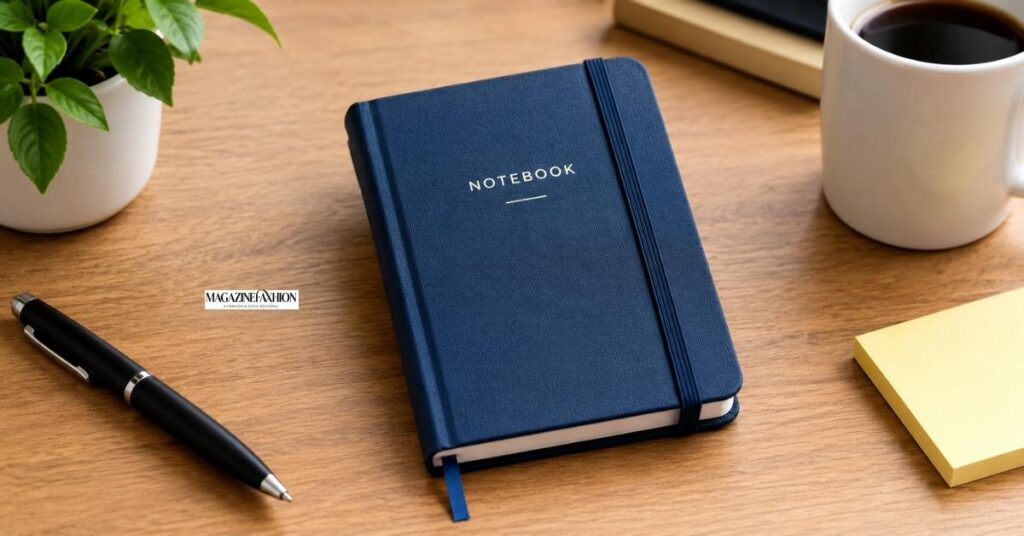
A small hardcover notebook offers a useful way to picture 16 cm. Some pocket notebooks measure close to this length along one side, but their dimensions depend on the format.
Imagine a notebook resting on your desk. Its height might approach 16 centimeters, making it a convenient reference for other small objects.
Check the notebook’s height rather than its thickness. These dimensions describe different aspects of its physical size.
A notebook measuring 16 cm tall may work well for notes, reminders, shopping lists, or quick sketches. It can also fit into some bags and desk organizers.
Try this comparison: Place the notebook beside a ruler and locate the 16 cm mark.
You’ll see exactly how much space the measurement covers. This method is more reliable than guessing based on the notebook’s appearance.
5. Kitchen Vegetable Peeler

A compact vegetable peeler can help you visualize a 16 cm measurement. Some peelers approach this overall length, although their handles and blades vary by manufacturer.
Picture a peeler lying beside a kitchen knife. Its short handle and small blade make it a useful example of a handheld kitchen tool.
Measure the peeler from the end of its handle to the farthest point of its blade. Avoid measuring only the handle if you want the overall length.
Vegetable peelers are designed to remove thin layers of skin from potatoes, carrots, apples, and other produce. Their compact size makes them convenient to store in kitchen drawers.
Everyday example: When organizing kitchen utensils, knowing an item’s length helps you choose a suitable drawer compartment.
Always measure your particular peeler rather than assuming it is exactly 16 cm long.
6. Compact Flashlight

A compact flashlight provides another way to understand what 16 cm looks like. Some handheld models measure around this length, although smaller keychain lights and larger outdoor flashlights differ considerably.
Imagine holding a flashlight with its body extending across your palm. If its overall length approaches 16 centimeters, you can use it as a rough reference for similar objects.
Measure from the back end to the front edge of the flashlight. Don’t include a separate strap unless the product specifications count it as part of the overall dimensions.
Compact flashlights are useful for emergency kits, travel bags, and household drawers.
Practical example: If you’re choosing a flashlight for a small storage box, compare its listed dimensions with the available space.
Remember that length is only one factor. Diameter also matters when checking whether the flashlight fits into a narrow compartment.
7. Travel Toothbrush Case
A travel toothbrush case can help you picture a length of 16 cm. Some cases approach this size, but the exact dimensions depend on the toothbrush they are designed to hold.
Imagine packing a toothbrush case inside a toiletry bag. Its length can determine whether it fits beside shampoo bottles, skincare products, and other bathroom accessories.
Measure the case from one end to the other. If it measures close to 16 centimeters, it provides a convenient real-life comparison.
Cases also vary in width and depth. A long, narrow case may fit differently from a wider container with the same length.
Shopping tip: Check the product’s internal dimensions if you need to store a particular toothbrush.
The outer measurement alone may not tell you how much usable space the case provides.
8. Small Wooden Cooking Spoon
A small wooden cooking spoon can provide a familiar comparison for 16 cm. Some miniature spoons approach this length, but many standard cooking spoons are longer.
Picture a spoon resting beside a mixing bowl. Its handle may extend across a distance close to 16 centimeters, depending on the design.
To check the measurement, place the spoon on a flat surface. Measure from the end of the handle to the tip of the bowl.
Wooden spoons are common kitchen utensils because they work well for stirring sauces, mixing ingredients, and serving food.
Everyday example: A compact spoon can fit conveniently into a small utensil organizer.
However, make sure you measure the entire spoon rather than only its handle. That distinction matters when comparing its size with other household objects.
9. Reusable Coffee Cup Sleeve
A reusable coffee cup sleeve offers a different kind of measurement comparison. Unlike a straight utensil, a sleeve wraps around a cup, so its flat length and fitted dimensions describe different things.
Some sleeves may have a flat measurement close to 16 cm. Their actual circumference and height depend on the cup size and sleeve design.
Imagine placing the sleeve flat on a table. You can measure its length before wrapping it around a cup.
However, don’t confuse the sleeve’s flat width with its circumference. A flexible sleeve changes shape when you stretch or fit it around a container.
Practical example: When buying a replacement sleeve, check the manufacturer’s measurements and the cup’s circumference.
This helps you choose a sleeve that fits properly rather than relying on a visual estimate alone.
10. Small Clipboard
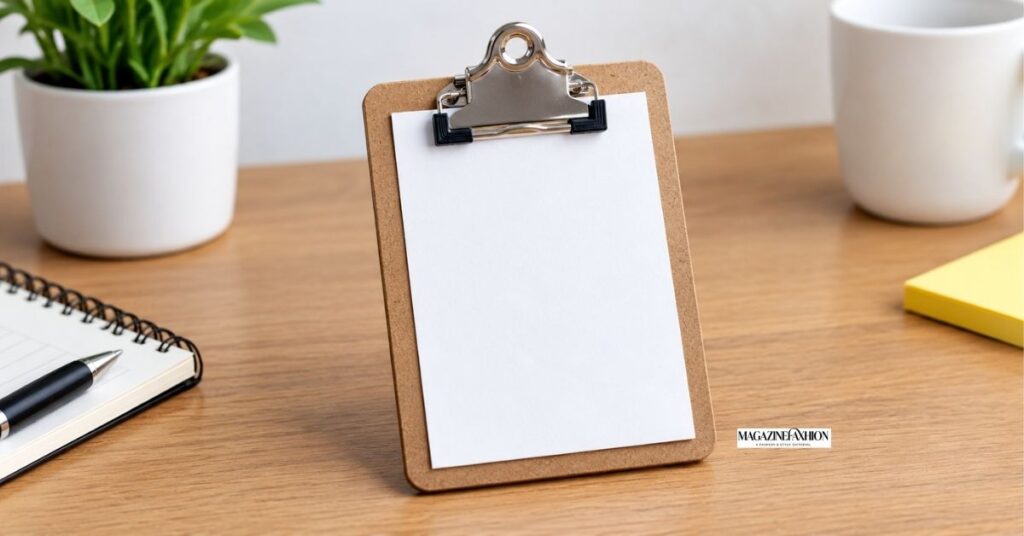
A small clipboard can help you visualize 16 cm through its width or another dimension. Some compact models have one side close to this measurement, but clipboard sizes vary widely.
Imagine placing a small clipboard on a desk. Its overall size makes it easy to compare with notebooks, paper sheets, and other office supplies.
Measure its width and height separately. A clipboard measuring 16 cm wide might be much taller than 16 cm.
Small clipboards are useful for holding checklists, taking notes, or keeping paperwork together while standing.
Practical example: If you need a clipboard for a compact workspace, check its dimensions before ordering it.
This is particularly helpful when you want it to fit inside a drawer, bag, or document organizer.
11. Measuring Cup Handle

A measuring cup handle can help you understand 16 cm, but the handle’s length depends on the cup’s size and design.
Some larger measuring cups have handles approaching this length. Smaller cups may have much shorter handles.
Imagine holding a measuring cup while preparing ingredients. Its handle extends away from the container, making length and overall dimensions important when storing it.
Measure from the point where the handle begins to the end of the grip. If you want the cup’s full dimensions, measure the container separately.
Kitchen example: A measuring cup with a long handle may need more room in a drawer than a compact design.
Always check the cup’s overall height and width as well. These measurements help you decide whether it will fit inside your kitchen storage space.
12. Cosmetic Makeup Brush
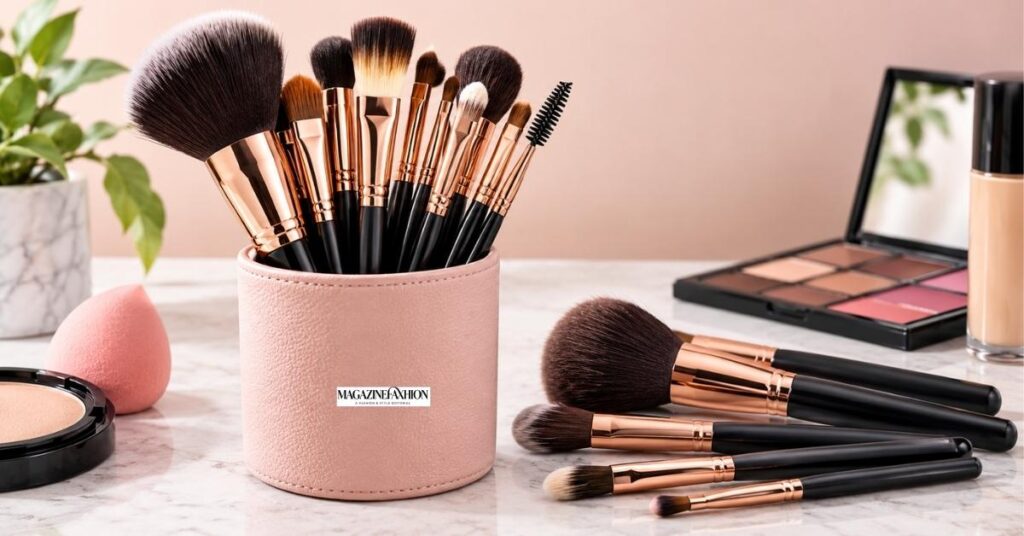
A cosmetic makeup brush can help you visualize a length close to 16 cm. Many full-size brushes fall within this general range, although compact travel brushes may be shorter.
Imagine holding a makeup brush between your fingers. Its handle and bristles together form the overall length.
To measure it accurately, place the brush on a flat surface. Measure from the bottom of the handle to the tip of the bristles without bending them.
Makeup brushes come in different shapes for foundation, powder, blush, and eye makeup. Their dimensions vary according to their purpose.
Everyday example: A brush measuring approximately 16 cm may fit inside some cosmetic bags.
However, check the bag’s internal length and width before purchasing it. The brush’s shape and handle thickness can also affect storage.
13. Compact Shoehorn
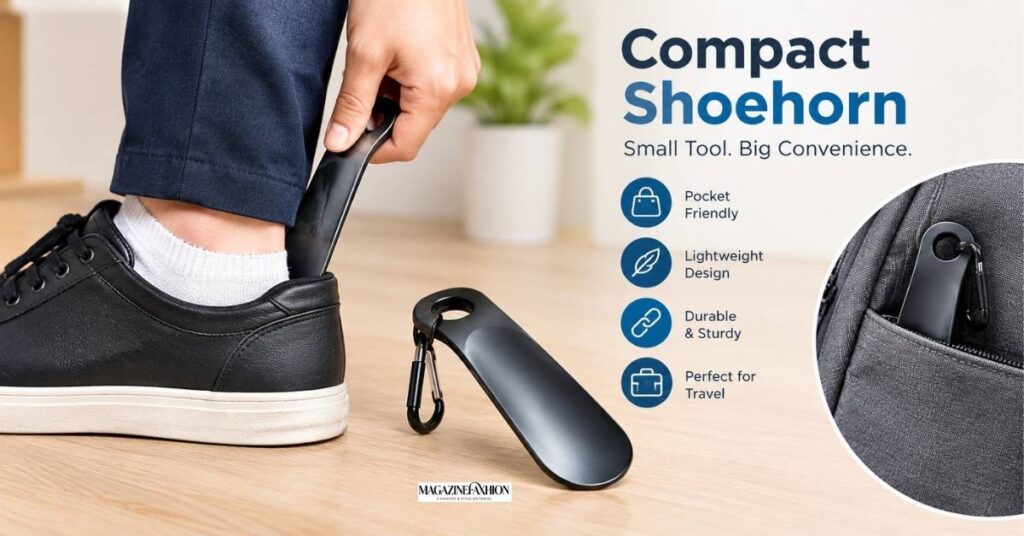
A compact shoehorn offers another possible comparison for 16 cm. Small travel shoehorns can approach this length, while longer models may measure considerably more.
Imagine keeping a small shoehorn inside a travel bag. Its compact size can make it convenient for trips, hotel stays, and everyday use.
Measure the shoehorn from the end of its handle to its curved tip. This gives you its overall length.
Shoehorns come in plastic, wood, and metal. Some fold for easier storage, while others have a fixed shape.
Practical example: A shoehorn measuring close to 16 cm may fit inside a small accessory pouch.
Before purchasing one, compare its length with the space available in your bag. If the shoehorn folds, check both its folded and unfolded dimensions.
14. Small Hand Mirror
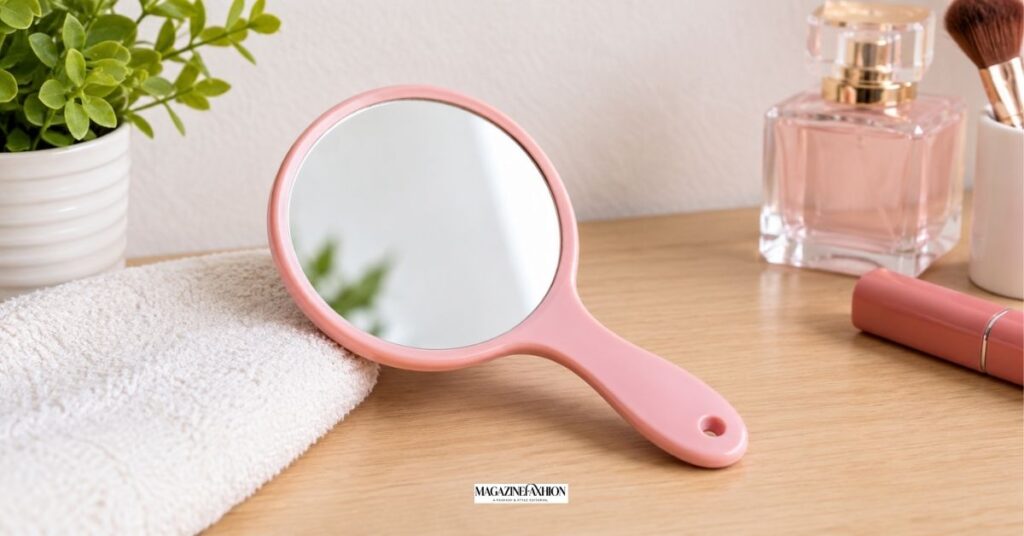
A small hand mirror can help you picture 16 cm, especially when one of its dimensions approaches this measurement.
Some compact mirrors have a body or handle close to 16 centimeters. However, pocket mirrors can be much smaller, and larger grooming mirrors may be considerably longer.
Imagine holding a mirror while getting ready in the morning. Its overall length determines how easily you can hold it and store it.
Measure from one end to the other. If the mirror has a separate handle, measure the complete item rather than just the reflective surface.
Everyday example: A hand mirror measuring around 16 cm may fit inside some bathroom organizers.
Check its width and thickness too. A mirror with a wide frame might require more storage space than its length alone suggests.
15. Zipper Storage Pouch
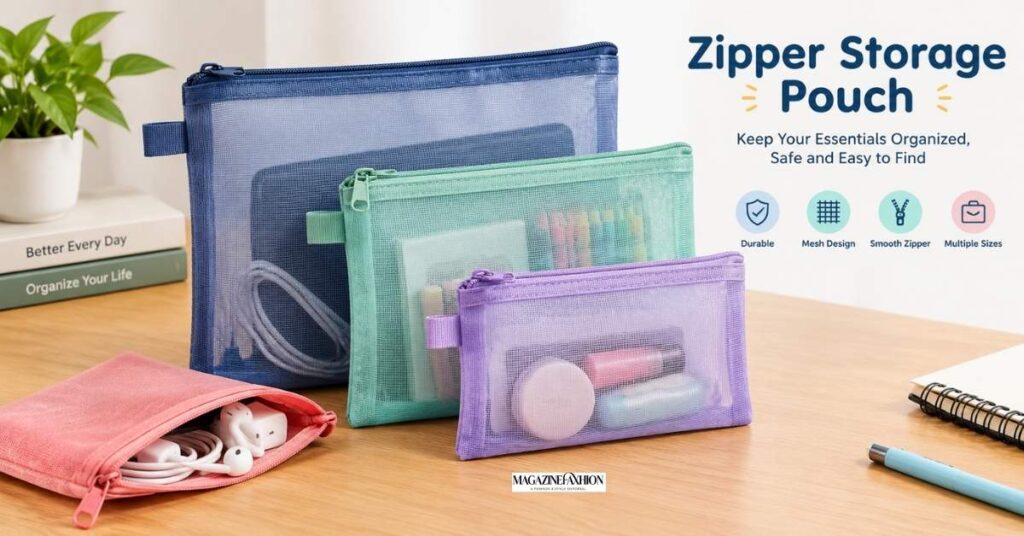
A zipper storage pouch is a useful example of how 16 cm can relate to everyday storage. Some small pouches measure approximately this length, although their dimensions vary.
Imagine placing pens, charging cables, makeup products, or travel accessories inside a compact pouch. Its length helps determine which items will fit comfortably.
Measure the pouch while it lies flat. If it measures 16 cm from side to side, remember that this doesn’t describe its height or depth.
Soft pouches can also change shape when filled. Their usable space depends on the material, zipper placement, and overall design.
Shopping tip: Check the internal dimensions if you need the pouch to hold a particular item.
A pouch measuring 16 cm externally may have slightly less usable space inside.
16. Standard Pencil

A standard pencil is a familiar object for understanding length. However, a new full-size pencil usually measures longer than 16 cm, so it isn’t an exact match.
Short pencils, including some well-used pencils, may approach this measurement. Their lengths depend on how much they’ve been sharpened and used.
Imagine placing a pencil beside a ruler. The comparison shows how 16 cm relates to a common school or office supply.
This example also demonstrates why you shouldn’t assume familiar objects have fixed dimensions. Pencil lengths differ by brand, style, and condition.
Try this: Measure a pencil you already own. Compare its length with the 16 cm mark.
That simple activity helps you understand approximate length and makes it easier to visualize centimeters during schoolwork or crafts.
17. Small Notebook

A small notebook is another useful reference for a 16 cm measurement. Depending on its format, one side may measure close to 16 centimeters.
Picture a notebook beside your phone or keyboard. Its dimensions can help you estimate the length of other stationery items.
Measure the height and width separately. A notebook that’s 16 cm tall may have a width of only 10 or 12 cm.
Small notebooks are useful for journaling, reminders, class notes, and shopping lists. Their compact dimensions also make them convenient for travel.
Practical example: If a bag has an internal height of 16 cm, check whether your notebook will fit upright.
Allow extra space for the cover, corners, and any zipper or closure that might reduce the available opening.
18. Hair Comb
A hair comb can help you understand what 16 cm looks like. Some combs approach this length, although pocket combs are often shorter and styling combs may be longer.
Imagine holding a comb in your hand. Its straight shape makes it relatively easy to compare with a ruler or measuring tape.
Measure from the tip of the handle or one end of the comb to the opposite end. Use the full length rather than measuring only the teeth.
Hair combs come in many styles, including wide-tooth combs, fine-tooth combs, and folding travel combs.
Everyday example: A comb measuring around 16 cm may fit inside some toiletry bags or bathroom organizers.
Check its actual dimensions before choosing a storage case. Its width and shape can also affect how easily it fits.
19. Portable Speaker

A portable speaker can provide a useful comparison for understanding 16 cm. Some compact speakers have a longest dimension near this length, while other models are much larger.
Imagine placing a small speaker on a desk. Its size depends on the design, battery, speaker drivers, and protective casing.
Measure its longest side if you want to compare it with a 16 cm reference. Also check its height and depth because a speaker’s overall shape matters when choosing a storage space.
Portable speakers are popular for travel, outdoor activities, and home use.
Shopping tip: If a product listing gives dimensions of 16 × 7 × 5 cm, the speaker measures 16 cm along its longest listed side.
Always check the order of the dimensions before deciding whether it will fit.
20. Compact Kitchen Utensil
A compact kitchen utensil can help you visualize 16 cm. Small serving tools, mini turners, and certain specialty utensils may approach this length.
Imagine opening a kitchen drawer filled with cooking tools. Some items are short and narrow, while others need considerably more room.
Measure the entire utensil to determine its overall length. If it has a handle and working end, include both in your measurement.
Compact utensils can be useful for small pans, lunch containers, and limited kitchen spaces.
Practical example: A 16 cm utensil may fit inside a shallow drawer, depending on the drawer’s internal dimensions.
Before organizing your kitchen, measure the drawer and the utensil. This helps you make better use of available space without relying on guesswork.
16 cm in Daily Life
A 16 cm measurement may seem small, but it can matter when you’re choosing products or organizing household items.
For example, imagine buying a storage box online. The listing states that the box is 16 cm long. You can use the conversion to picture its size more clearly.
Because 16 cm equals approximately 6.30 inches, it can be easier to compare with products described using imperial measurements.
This knowledge helps in several situations:
- Shopping: Check whether an accessory will fit inside a bag.
- Cooking: Compare the length of utensils with drawer space.
- Schoolwork: Understand metric measurements in assignments.
- Crafting: Estimate the dimensions of paper and materials.
- Travel: Choose compact organizers for personal belongings.
Remember that length is only one part of an object’s dimensions. Check height and width whenever the available space is limited.
Visualizing 16 cm Without a Ruler
You don’t always need a ruler to estimate 16 cm. A few familiar references can help you make a reasonable guess.
One option is to use a banknote. A US dollar bill measures approximately 15.6 cm long, which is very close to 16 cm.
Place the bill beside the object you want to estimate. The difference is only about 4 millimeters.
You can also use a measuring tape, a marked ruler, or a reference object whose dimensions you’ve checked previously.
Try these methods:
- Compare the object with a US dollar bill.
- Estimate the length using a familiar notebook.
- Use your hand as a rough reference.
- Check the object’s dimensions against a ruler when available.
Hand measurements vary between people, so they aren’t reliable for exact measurements. For precision, use a proper measuring tool.
Common Mistakes When Estimating 16 cm
Estimating length without a ruler can be convenient, but a few mistakes can lead to inaccurate results.
The most common problem is assuming every object of a particular type has the same dimensions. For example, smartphone heights vary by model, and hairbrushes come in many sizes.
Another mistake involves confusing length with width or height. An object might measure 16 cm across but be much longer from top to bottom.
Watch out for these errors:
- Guessing from appearance: Objects can look similar while having different dimensions.
- Using an unverified reference: Your favorite pen might not have the length you expect.
- Ignoring perspective: Objects viewed from an angle can appear shorter or longer.
- Mixing units: Centimeters and inches aren’t interchangeable numbers.
- Forgetting product variations: Different models often have different measurements.
If accuracy matters, measure the object directly. A quick check can prevent costly mistakes.
16 cm Compared to Other Measurements
Understanding 16 cm becomes easier when you compare it with other familiar lengths.
The measurement equals 160 millimeters or approximately 6.30 inches. It’s also equal to 0.16 meters.
These conversions are useful when reading international product descriptions or following instructions that use different measurement systems.
Here’s a quick comparison:
| Measurement | Length |
| 1 cm | 0.39 inches |
| 5 cm | 1.97 inches |
| 10 cm | 3.94 inches |
| 15 cm | 5.91 inches |
| 16 cm | 6.30 inches |
| 20 cm | 7.87 inches |
| 30 cm | 11.81 inches |
Notice that 16 cm is slightly longer than 15 cm and shorter than 20 cm.
This comparison provides a simple reference when you don’t need an exact measurement. For technical tasks, always use the correct unit and measuring tool.
How 16 cm Is Used in Product Design
Product designers consider dimensions when creating objects that people can hold, carry, store, or use comfortably.
A length of 16 cm might suit a compact accessory, a small household tool, or part of a larger product. However, the ideal dimension depends on the item’s purpose.
For example, designers creating a travel accessory may need to balance portability with usable storage space. A product that’s too long might not fit inside a small bag.
Designers also consider width, height, weight, material, and ergonomic needs. A 16 cm handle could feel comfortable in one application but unsuitable in another.
Product specifications help manufacturers communicate these dimensions clearly.
When buying an item, compare its measurements with your needs rather than assuming a particular size is automatically better. The right dimensions depend on how you plan to use the product.
Why Accurate Measurements Matter
Accurate measurements help you choose products that fit your needs. Even a small difference can matter when you’re working with limited space.
Imagine buying a storage compartment that’s 16 cm long. If the item you want to store measures 17 cm, it won’t fit lengthwise without changing the arrangement.
The same principle applies to crafts, DIY projects, and household organization.
Accurate measurements help you:
- Avoid buying products that are too large.
- Choose suitable storage containers.
- Follow craft instructions correctly.
- Compare product specifications.
- Reduce waste from incorrect cuts.
- Plan spaces more effectively.
For everyday estimates, familiar objects can be helpful. However, use a measuring tape or ruler whenever the dimensions must be precise.
Always measure the relevant side of the object. Length, width, height, and diameter describe different dimensions and shouldn’t be confused.
Tips to Estimate 16 cm More Easily
Estimating 16 cm becomes easier when you practice with familiar objects and check your guesses against actual measurements.
Start with a reference you can measure accurately. A US dollar bill, for example, is approximately 15.6 cm long, making it close to the 16 cm target.
Next, compare objects of different shapes. Try a notebook, a compact utensil, and a small electronic accessory.
Use these tips:
- Learn the conversion: Remember that 16 cm is about 6.30 inches.
- Choose reliable references: Measure your reference objects before using them.
- Check different dimensions: Don’t confuse height with length.
- Practice regularly: Estimate a few objects each day.
- Verify your results: Use a metric ruler to see how close your estimate was.
With practice, you’ll become more comfortable judging approximate lengths. Still, don’t rely on visual estimates for tasks that require precision.
FAQs
How big is 16 cm in inches?
16 cm equals approximately 6.30 inches.
It’s slightly longer than 6 inches.
Is 16 cm considered a large measurement?
It depends on the object you’re measuring.
It’s small for furniture but fairly common for handheld items.
How can I estimate 16 cm without a ruler?
A US dollar bill is approximately 15.6 cm long.
Use it as a reference to estimate 16 cm.
Is 16 cm commonly used in daily life?
Yes, you may find similar lengths in household tools, notebooks, and accessories.
Always check the object’s actual dimensions for accuracy.
What everyday objects are about 16 cm long?
Some compact TV remotes, makeup brushes, and kitchen utensils may measure close to 16 cm.
Their exact lengths vary by design and model.
Conclusion
So, how big is 16 cm? It equals approximately 6.30 inches, or 160 millimeters. You can visualize this measurement by comparing it with a US dollar bill, a compact notebook, or a small household accessory. Some TV remotes, makeup brushes, and kitchen utensils may also approach this length.
Remember that these objects vary in size. Use them as rough references rather than assuming every example measures exactly 16 centimeters. If you need a precise measurement, use a metric ruler or measuring tape. With a little practice, you’ll find it much easier to picture 16 cm and understand product dimensions in everyday life.

Lucas Grant is a fashion writer and digital content creator focused on contemporary style, clothing trends, and fashion culture. At magazinefaxhion, he researches seasonal trends, styling ideas, and industry developments to create clear, practical articles. His editorial approach combines careful research, creative storytelling, and reader focused fashion insights.